Judaism in Justification and Variegated Nomism

D. A. Carson, Peter O'Brien, and Mark Seifrid

D. A. Carson, Peter O’Brien, and Mark Seifrid

In contrast to Sanders’ emphasis on the essential consistency of Palestinian Judaism’s pattern of religion, the essays in Second Temple Judaism ( affiliate disclosure) emphasize the nomistic diversity, or variegation, that ancient Judaism exhibited.

...

October 19, 2018 · 11 min · J. David Stark

Review of Biblical Literature Newsletter (April 24, 2015)

The latest reviews from the Review of Biblical Literature include:

August 30, 2017 · 2 min · J. David Stark

Greenspoon, review of Tov, Text-critical use of the Septuagint

Leonard Greenspoon has a helpful review of the third edition of Emanuel Tov’s Text-Critical Use of the Septuagint in Biblical Research (Eisenbrauns, 2015). Particularly useful are Greenspoon’s observations about changes in this edition over against the previous one.

...

October 29, 2016 · 1 min · J. David Stark

Review of Biblical Literature Newsletter (May 7, 2015)

The latest reviews from the Review of Biblical Literature include:

May 7, 2015 · 1 min · J. David Stark

Review of Biblical Literature Newsletter (May 1, 2015)

The latest reviews from the Review of Biblical Literature include:

May 1, 2015 · 2 min · J. David Stark

Review of Biblical Literature Newsletter (April 17, 2015)

The latest reviews from the Review of Biblical Literature include:

April 20, 2015 · 2 min · J. David Stark

Review of Biblical Literature Newsletter (April 10, 2015)

The latest reviews from the Review of Biblical Literature include:

April 13, 2015 · 2 min · J. David Stark

Review of Biblical Literature Newsletter (April 3, 2015)

The latest reviews from the Review of Biblical Literature include:

April 6, 2015 · 2 min · J. David Stark

Review of Biblical Literature Newsletter (March 27, 2015)

The latest reviews from the Review of Biblical Literature include:

March 30, 2015 · 2 min · J. David Stark

Review of Biblical Literature Newsletter (March 20, 2015)

The latest reviews from the Review of Biblical Literature include:

March 23, 2015 · 2 min · J. David Stark

Review of Biblical Literature Newsletter (March 13, 2015)

The latest reviews from the Review of Biblical Literature include:

March 13, 2015 · 1 min · J. David Stark

Review of Biblical Literature Newsletter (9 March 2015)

The 9 March 2015 newsletter for the Review of Biblical Literature noted reviews of several noteworthy volumes.

March 11, 2015 · 2 min · J. David Stark

Review of Biblical Literature Newsletter (February 27, 2015)

The latest reviews from the Review of Biblical Literature include:

February 27, 2015 · 1 min · J. David Stark

Review of Biblical Literature Newsletter (February 6, 2015)

The latest reviews from the Review of Biblical Literature include:

February 6, 2015 · 1 min · J. David Stark

Was the Teacher of Righteousness Considered to Be a Messiah?

John Collins rightly argues that the possibility of a positive answer to this question depends heavily on what one means by משיח (messiah).

January 6, 2010 · 4 min · J. David Stark

“How to Write a Lot”

Paul Silvia

Paul Silvia

Paul J. Silvia teaches psychology at the University of North Carolina, Greensboro. In
How to Write a Lot: A Practical Guide to Productive Academic Writing, Silvia chiefly pleads with his readers to set aside specific, regular blocks of time for writing and to adhere steadfastly to this schedule ( 16–17). “The secret,” he says, “is the regularity, not the number of days or the number of hours [allotted for writing]” ( 13). Silvia argues that observing such a regular writing schedule will allow an author to produce better material more efficiently ( 1). “More efficiently” does not, of course, necessarily indicate that all academics should publish a large quantity of material; those whose interests lie elsewhere can still use a regular writing schedule to produce the quantity of literature that they wish. Thus, Silvia suggests that a more accurate title for the volume would be How to Write More Productively During the Normal Work Week with Less Anxiety and Guilt, but he humorously recognizes that such a title may well have inhibited book sales ( 130).

...

June 15, 2009 · 4 min · J. David Stark

Book Review: The Office of Assertion

Scott Crider

Scott Crider

Scott Crider teaches in the English Department at the University of Dallas. His book, The Office of Assertion: An Art of Rhetoric for the Academic Essay ( affiliate disclosure), is intended to provide an introduction to “the classical art of rhetoric and composition” (xi). While providing this introduction, Crider specifically seeks to argue that rhetoric is, as a liberal art, a noble pursuit and to improve the readers ability to write academic prose (2).

...

May 20, 2009 · 5 min · J. David Stark

Justification and Variegated Nomism

[caption id=“attachment_1423” align=“alignleft” width=“80” caption=“D. A. Carson, Peter O’Brien, and Mark Seifrid”] D. A. Carson, Peter O’Brien, and Mark Seifrid[/caption]If first-century Judaism had a different shape than much New Testament scholarship has traditionally assumed, then an understanding of the New Testament’s—and especially Paul’s—negative critique of Judaism, as well as the positive, doctrinal affirmations predicated to some degree upon this traditional view of Judaism, may need to be revised. The direction this revision has taken based on the trajectory Sanders set in the last portion of Paul and Palestinian Judaism ( 431–556), 1 provides the impetus for the Justification and Variegated Nomism set ( Carson, O’Brien, and Seifrid 5). This set attempts to determine “whether ‘covenantal nomism’ serves us well as a label for an overarching pattern of religion” in Palestinian Judaism ( Carson, O’Brien, and Seifrid 5).

...

April 21, 2009 · 2 min · J. David Stark
9781506438146h

Judaism in Paul and Palestinian Judaism

The New Perspective on Paul has its beginnings in what N. T. Wright has called “the Sanders revolution.”

April 20, 2009 · 3 min · J. David Stark

The Interpretation of the New Testament, 1861–1986: Interaction

[caption id=“attachment_668” align=“alignleft” width=“80” caption=“Stephen Neill and N. T. Wright”] Stephen Neill and N. T. Wright[/caption] Neill’s stated purpose for his book was “to provide a narrative [about the interpretation of the New Testament] that can be read without too much trouble by the non-theologian who is anxious to know and is prepared to devote some time to the subject” ( ix). This task he seems to have done masterfully well, with a comparatively frugal use of footnotes to set forth “the necessary apparatus of scholarship” ( ix). While this history might have proved tedious, Neill has managed to produce a cogent narrative that, at times, may well carry the interested student into the situation or the time being described.

...

February 20, 2009 · 2 min · J. David Stark

The Interpretation of the New Testament, 1861–1986: Summary

Stephen Neill and N. T. Wright

Stephen Neill and N. T. Wright

N. T. Wright’s revision of Stephen Neill’s, Interpretation of the New Testament, 1861–1986, attempts a concise, but significantly narratival, survey of various issues in New Testament scholarship during the period in question. To this end, Neill and Wright discuss: (i) the challenge to orthodoxy ( 1–34); (ii) the New Testament and its relationship to history ( 35–64); (iii) what the New Testament says and means ( 65–111); (iv) Jesus and His relationship to the Gospel ( 112–46); (v) Greeks and their relationship to Christians ( 147–204); (vi) “Re-enter[ing] Theology” ( 205–51); (vii) the theory of a gospel behind the Gospels ( 252–312); (viii) the Jewish background of the Gospel ( 313–59); and (ix) the relationship between history and theology ( 360–449).

...

February 19, 2009 · 2 min · J. David Stark

Simon Kistemaker – Interaction

[caption id=“attachment_635” align=“alignleft” width=“80” caption=“Simon Kistemaker”] Simon Kistemaker[/caption] Simon Kistemaker generally provides balanced, astute commentary on several of Jesus’ parables and parabolic sayings. He attempts to avoid allegorical interpretations, thinking that “in the New Testament we encounter elements of allegory but never a full-fledged allegorical parable” ( 15). This surface disagreement with Blomberg’s perspective on the parables is mainly an issue of semantics. In actuality, Kistemaker’s point merely reflects the very probable hypothesis that in none of Jesus’ parables do all the details stand for things other than themselves, or stated alternatively, that Jesus’ parables—even the allegorical ones—are qualitatively different from an allegory like The Pilgrim’s Progress. One of the chief benefits of The Parables is how Kistemaker consistently summarizes with simplicity and clarity what he considers to be the main points of each parable. Occasionally, one might well debate some precise points of exegesis. Yet, the work is, overall, engaging and informative, and Kistemaker’s style is coherent and straightforward.

...

February 17, 2009 · 1 min · J. David Stark

Simon Kistemaker – Summary

Simon Kistemaker

Simon Kistemaker

In The Parables, Simon Kistemaker specifically targets “theologically trained pastors. But because technical details have been relegated to endnotes, the text itself is user-friendly to any serious student of the Bible” ( 8). The introduction describes very broadly some of the basic issues of which one should be aware when studying parables, such as: the meaning of the term “parable,” the composition of parables, Jesus’ purpose for teaching in parables, the basic principles of interpreting parables, and the elusiveness of any firm method of classifying the parables ( 9–20).

...

February 16, 2009 · 2 min · J. David Stark

Dominic Crossan – Interaction

[caption id=“attachment_601” align=“alignleft” width=“80” caption=“Dominic Crossan”] Dominic Crossan[/caption] Crossan’s book, In Parables, immediately demonstrates his keen intellect and wide range of reading. The great variety of literature he cites certainly indicates his substantial, literary aptitude. One of the more beneficial parts of the book, however, relates more directly to his detailed reading of Jesus’ parables themselves rather than so much to his wide reading in other literature. Specifically, Crossan performs a very valuable service in his detailed analyses of multiply attested parables in relation to the synoptic problem. Crossan’s close reading of these parables and his subsequent notes on points of divergence between the parable froms in the synoptics helpfully summarizes the major critical issues involved with these parables. The solutions he proposes to these difficulties are frequently innovative and seem to be motivated by a desire to recapture the exact wording Jesus used when He originally gave the parables ( ipsissima verba) ( 3–4). Nevertheless, many scholars might, in most cases, propose quite different solutions from those Crossan puts forth (cf. vii, 3–4). The book does have some questionable aspects, such as an excessive skepticism about the historical Jesus (e.g., 4; for a critical realist approach to this question, see Wright, Jesus and the Victory of God). Yet, In Parables definitely provides itself to be valuable by providing the reader with much helpful information concerning the divergences present in Jesus’ multiply attested parables.

...

February 12, 2009 · 2 min · J. David Stark

Dominic Crossan – Summary

Dominic Crossan

Dominic Crossan

Crossan’s work, In Parables: The Challenge of the Historical Jesus, is based on several articles that Crossan wrote separately and has now compiled into a single collection ( xi). Rather uniquely, through citations from various scholars and littérateurs, the introduction and conclusion attempt to provide some literary commentary related to different ways of reading parables. The first major section, “Parables and the Temporality of the Kingdom” ( 3–36), addresses several broad issues related to literary theory, describes what constitutes a parable, and identifies a method for parable interpretation. At this section’s conclusion, Crossan groups Jesus’ parables by what he sees as their three major themes—namely, the advent of God’s kingdom, the reversal of the worldview of the parables’ addressees, and the calling and empowering of the recipients to live and act in concert with God’s kingdom ( 36). In each of the following chapters, Crossan comments generally about one of these themes and examines at least one parable that, in his estimation, fits that category.

...

February 11, 2009 · 2 min · J. David Stark

Craig Blomberg – Interaction

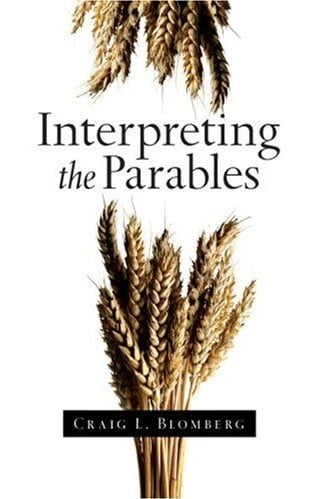
[caption id=“attachment_501” align=“alignleft” width=“80” caption=“Craig Blomberg”] Craig Blomberg[/caption] In Interpreting the Parables, Blomberg appears to have succeeded quite well in accomplishing his stated task of producing an introduction to and theory of parable interpretation that will benefit a wide variety of readers ( 10). To this end, he keeps unnecessary, technical jargon to a minimum, yet regularly handles the necessary, technical points quite clearly.

...

February 9, 2009 · 2 min · J. David Stark

Summary of Validity in Interpretation

Alan Knox has made my summary of E. D. Hirsch’s Validity in Interpretation available on his website, ̔Ελληνιστί, in HTML format.

A PDF version of this summary is also available here.

Update (19 June 2017): The above-noted link to Alan Knox’s website is currently broken. Please see the summary at the PDF link mentioned above.

...

February 6, 2009 · 1 min · J. David Stark

Craig Blomberg – Summary

Interpreting the Parables

Interpreting the Parables

Craig Blomberg, Interpreting the Parables ( affiliate disclosure; Downers Grove, Ill.: InterVarsity, 1992).

Interpreting the Parables begins by summarizing significant findings and methodological issues in recent parable research so that a wide audience can benefit from this historical foundation for Blomberg’s work (13).

In reviewing this previous scholarship, Blomberg seeks to interact critically with it and, at some points, propose specific alternatives (14). In Blomberg’s opinion, all Jesus parables are allegorical on some level.

...

February 5, 2009 · 2 min · J. David Stark

Kenneth Bailey – Interaction

[caption id=“attachment_482” align=“alignleft” width=“63” caption=“Poet and Peasant and Through Peasant’s Eyes”] Poet and Peasant and Through Peasant’s Eyes[/caption]Kenneth Bailey, Poet and Peasant and Through Peasant Eyes: A Literary-Cultural Approach to the Parables in Luke, (combined ed.; Grand Rapids: Eerdmans, 1983).
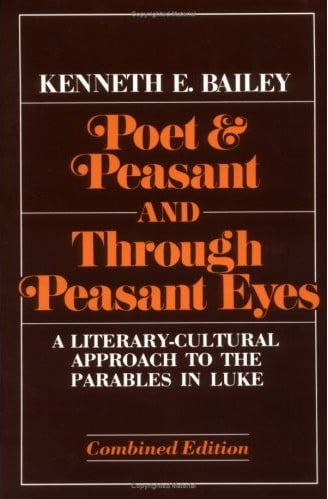
Bailey initially published Poet and Peasant and Through Peasant Eyes separately. Yet, they have begun circulating in combined editions like the one shown here, and the works are, in fact, quite amiable partners, since Through Peasant Eyes is, in significant respects, a continuation of Poet and Peasant. Both these works are thought-provoking and fascinating pieces of scholarship, particularly with respect to Bailey’s unique perspectives on Jesus’ parables and the approach he uses to arrive at these understandings. Particularly, Bailey’s practice of interviewing Middle Easterners for their perspectives on the parables highlights some nuances that may easily become muted in purely Western treatments. Because modern, Middle Eastern culture is arguably closer to the culture of first-century, Jewish Palestine than is modern Western culture, Middle Eastern readers begin with a natural advantage over their Western counterparts in interpreting the parables. While some changes in Middle Eastern culture during the last two millennia (most notably, the Muslim conquest) may have introduced significant paradigm shifts into the Middle Eastern worldview, consulting people (whether directly or through Bailey’s work) who live in cultures of seeds and sowers, neighbors and midnight visitors will surely provide valuable grist for the interpretive mills of those who come from other cultural backgrounds.

...
February 4, 2009 · 2 min · J. David Stark

Kenneth Bailey – Summary

Bailey’s works, Poet and Peasant and Through Peasant Eyes, explicitly attempt to approach Jesus’ parables from the perspective of an Oriental worldview.

February 3, 2009 · 2 min · J. David Stark