[caption id=“attachment_635” align=“alignleft” width=“80” caption=“Simon Kistemaker”] 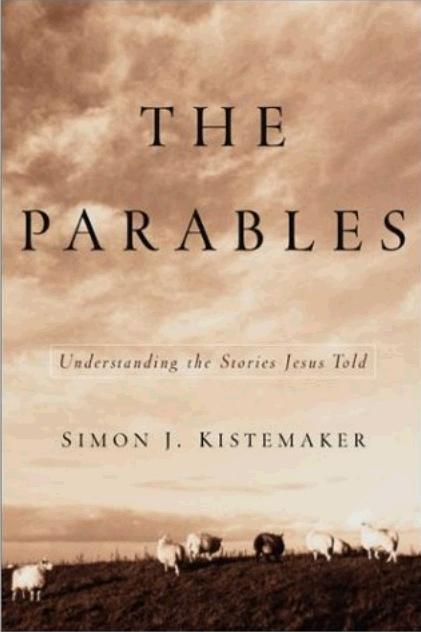 [/caption] Simon Kistemaker generally provides balanced, astute commentary on several of Jesus’ parables and parabolic sayings. He attempts to avoid allegorical interpretations, thinking that “in the New Testament we encounter elements of allegory but never a full-fledged allegorical parable” ( 15). This surface disagreement with Blomberg’s perspective on the parables is mainly an issue of semantics. In actuality, Kistemaker’s point merely reflects the very probable hypothesis that in none of Jesus’ parables do all the details stand for things other than themselves, or stated alternatively, that Jesus’ parables—even the allegorical ones—are qualitatively different from an allegory like The Pilgrim’s Progress. One of the chief benefits of The Parables is how Kistemaker consistently summarizes with simplicity and clarity what he considers to be the main points of each parable. Occasionally, one might well debate some precise points of exegesis. Yet, the work is, overall, engaging and informative, and Kistemaker’s style is coherent and straightforward.
In this post:[caption id=“attachment_2356” align=“alignleft” width=“80” caption=“John Bunyan”]  [/caption] [caption id=“attachment_635” align=“alignleft” width=“80” caption=“Simon Kistemaker”] [/caption]