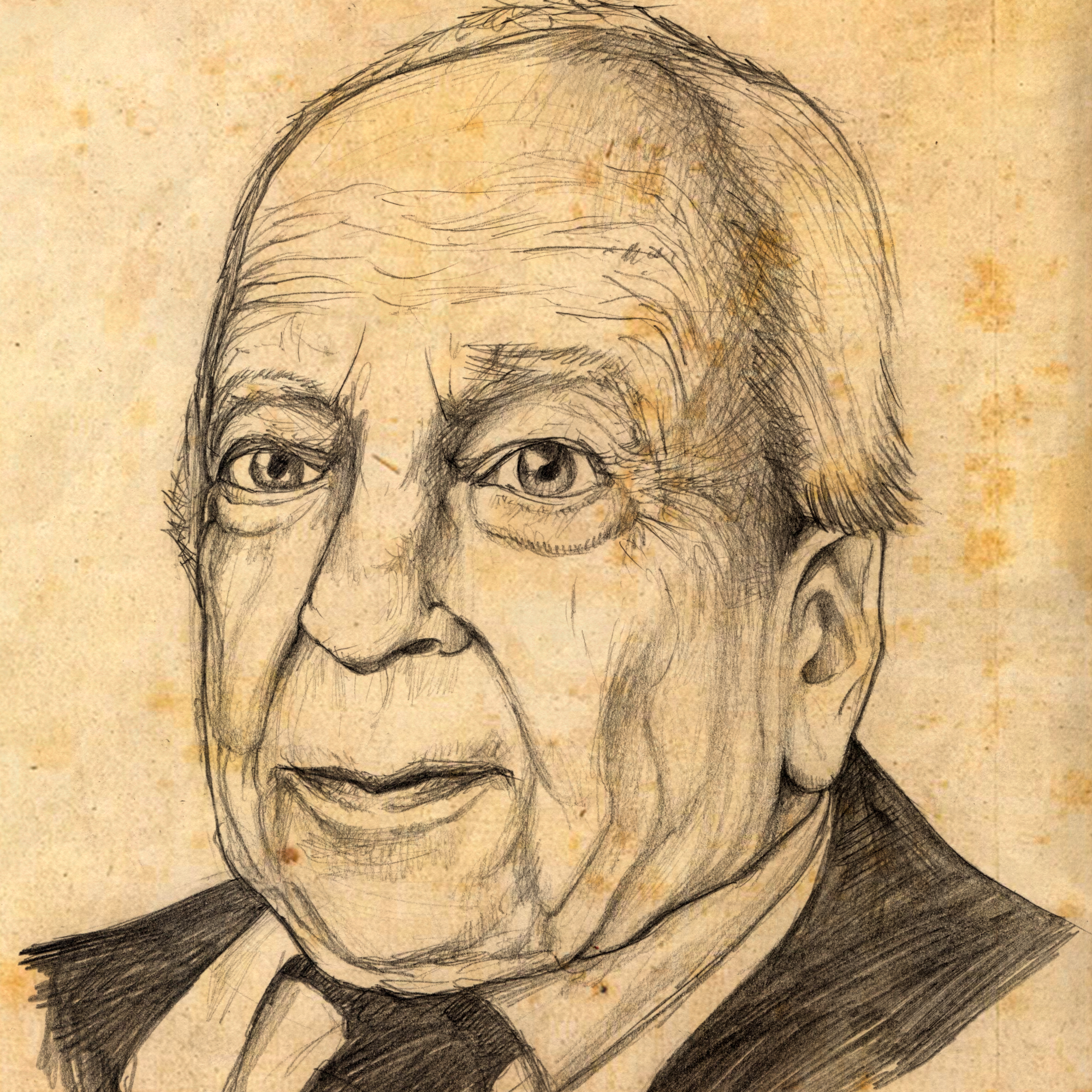
H.-G. Gadamer’s Truth and Method is a seminal text for contemporary hermeneutical theory.1 The work’s English translation is in its second edition, prepared by Joel Weinsheimer and Donald Marshall. This second edition, however, now exists in at least four different printings with four different sets of pagination.
An Overview of the Editions and Printings
In his Whose Community? Which Interpretation? (affiliate disclosure), 70n2, Merold Westphal notes how,
In a reader-unfriendly gesture, Crossroad reissued this second edition in 2004 with different pagination.
I haven’t found a “2004” edition issued by “Crossroad.” The first English edition seems to have been issued in 1975 by Sheed & Ward, with the second edition following in 1989 by Crossroad.
The second printing of the second edition I’ve only yet found to have been issued by Continuum. The first was in 1993, and it seems to be this printing that was reproduced—more or less exactly—in 2004 (affiliate disclosure). A second Continuum printing was issued in 2006 (affiliate disclosure). This printing was the third overall for the English translation’s second edition.
Differences among the 1989, 1993-2004, and 2006 Printings
The main difference between the second and third printings by Continuum seems to be the shift from footnotes in the 1993-2004 printing to endnotes in the 2006 printing. So, I wonder whether I’m missing a printing somewhere or whether Westphal’s footnote should perhaps describe how “Continuum [rather than Crossroad] reissued this second edition….”
In any case, the pagination shifts induce Westphal to adopt an awkward-but-helpful citation format of “TM x/y”. According to this convention,
x = pagination for the 1989 edition and y = pagination for the 2004 edition.2
Westphal’s volume came to press in 2009. So, the differences in the 2006 printing of Truth and Method may have come to light sufficiently late not to have invited him to provide yet a third set of pagination in his footnotes.
The 2013 Printing
The challenges with English editions of Truth and Method have, however, compounded still further with the title’s 2013 release (affiliate disclosure) in the Bloomsbury Revelations series. This fourth printing of the second edition is entirely re-typeset and produces still a fourth set of pagination that readers and researchers must handle.
At present, this fourth printing alone remains in print, since Continuum’s absorbtion by Bloomsbury. Although discontinued, the second and third printings under the Continuum name are still available in various more-or-less used copies.
The 2013 Printing and Its Difficulties
Binding and Margins
In Amazon reviews of the 2013 printing, there is some concern about durability and margin size. At this point, however, I’ve worked through and with this printing about a decade, copiously marking up its text. Overall, my copy has stood up quite well, and both its binding quality and margin size seem quite reasonable to me.
That said, on advice I first encountered in Rick Ostrov’s Power Reading (affiliate disclosure), I did prepare the volume’s spine when I first got it. This preparation may account for why the binding may be holding up better for me than it sometimes has for others.
Text
Of more concern are reviews that address the quality of the reprint itself (1, 2). When I saw these reviews initially, however, I thought they must have come from overly critical reviewers. Unfortunately, as I’ve worked with the 2013 printing also, I’ve found several features that suggest this printing was produced by
- scanning the 2006 text, which also has endnotes, as does the 2013 text,
- running the scanned text through optical character recognition software,
- reformatting certain elements (e.g., the font face), and
- not proofreading the final text as carefully as needed before the volume went to press (cf. the comments by Steve S.).
More Minor Errata
Some of the errata I’ve noted in the 2013 printing are below with the corresponding correction from the 2006 printing.
| In the 2013 printing, on page | the text | should read | as found in the 2006 printing on page |
|---|---|---|---|
| xii | Erfah-rung3 | Erfahrung | xiii |
| xv | Ver-ständigung3 | Verständigung | xvi |
| 107 | instead | Instead | 103 |
| 319 | sciences: | sciences. | 307 |
| 326 | techne —but4 | techne—but | |
| 361 | iilustrates | illustrates | 347 |
| 361 | latter— “experience” | latter—“experience” | 347 |
| 370 | platonic dialectic | Platonic dialectic5 | 356 |
| 417 | bat | but | 400 |
| 456 | language —differentiates4 | language—differentiates | 437 |
| 471 | As f see it | As I see it | 452 |
| 496 | grasped, ft | grasped. It | 475 |
| 518 | “feeling [the smart quotation mark curls in the wrong direction]6 | “feeling | 497 |
| 520 | need only have be | need only have be [presumably “need only have been” and a common error across the 1993, 2004, and 2013 printings] | 499 |
| 537 | Historistnus | Historismus | 516 |
| 546 | language,’6 | language,' | 524 |
| 546 | modem | modern | 524 |
| 552 | —“all [the smart quotation mark curls in the wrong direction] | —“all | 530 |
| 558 | modem | modern | 536 |
| 559 | Bewußitseins | Bewußtseins | 536 |
| 564 | the rise oi historical | the rise of historical | 542 |
| 587 | language —seems4 | language—seems | 565 |
Doubtless, this list isn’t full one, and some of these errata are fairly nominal. But there are also cases where the 2013 printing has more serious textual issues that can take a fair bit of work to sort out.
More Serious Errata
Example 1
On p. 463, the 2013 printing has the sentence
In a real community of language, on the other hand, we do not first decide to agree but are always already in agreement, as Aristotle showed.82
On consulting note 82 to follow up on the Aristotle reference, you’ll find
Cf. pp. 429f. above [and GW, II, 16, 74].
The bracketed portion is refers to Gadamer’s Gesammelte Werke (Collected Works). The notation “pp. 429f.,” however, presumably refers to pages 429–30 in Truth and Method. Here, the 2013 printing faithfully reproduces the text of the note in the 2006 printing. If you follow this reference, however, you’ll be puzzled to see not a discussion of Aristotle but of Plato and Socrates in Cratylus.
If you consult the 2006 printing, you’ll see on p. 489 printing the same reference. In this case, however, if you follow the reference to pp. 429–30 in the 2006 printing, you will indeed find the intended discussion of Aristotle and his Topics. In the 2013 printing, however, this discussion appears instead on pages 448–49 (!).
In the 1993-2004 printing, the corresponding cross-reference appears as a footnote on p. 446 and reads
Cf. pp. 431f. above [and GW, II, 16, 74].
And true enough, the 1993-2004 printing does indeed have the corresponding discusion of Aristotle on pp. 431–32.
So, an endnote reading “Cf. pp. 429f. above [and GW, II, 16, 74]” apparently derives from the 2006 text. There, the endnote has the same reading as the endnote in the 2013 text. But the production process for the 2013 failed to account for the shifts in pagination that make the cross reference incorrect for users of the 2013 printing.
Example 2
Similarly, on p. 501 of the 2013 printing, the text contains the parenthetical comment
cf. the “sermo de pulchritudine” of Nicholas of Cusa, cited above [p. 473]
Here again, the 2013 printing exactly reproduces the text of the 2006 printing. But in the 2013 printing, no citation of Nicholas’s sermon appears on p. 473.
Nor, strictly speaking, does one appear on p. 473 in the 2006 printing. Instead, in the 2006 printing, a sentence begins on p. 473 that ends on p. 474 with an endnote (118). This endnote’s text appears on pp. 491–92 and cites Nicholas’s sermon. In this case, the reference to p. 473 is comparatively forgivable since
- the sentence to which the citation is attached does start on p. 473 and
- the associated endnote could easily have moved from one page to the next unnoticed in the course of final editing.
The cross reference is still less clear than would be ideal, but it is quite a bit more accurate than the cross reference in the 2013 printing.7 There, the pertinent endnote reference appears on p. 495, and the text of the endnote containing the citation to Nicholas falls on p. 513.
Summary
In sum, Gadamer’s Truth and Method is a seminal text for contemporary reflection on hermeneutics. It is also, unquestionably, a difficult text through which to work.8
English readers can surely be grateful for English editions of the work. And naturally, such a translation gives far and away more than it takes.
At the same time, the English translation’s publication history certainly leaves something to be desired. Especially the errata the most up-to-date printing mean that, for the present, if you’re reading this printing, you need to be prepared for some additional tax on your engagement with the work.
Because of that tax, you need to wrestle not only with the content of Truth and Method’s argument. Sometimes, you also need to wrestle with the question of whether its text is correct as you have it.
Discuss on Bluesky, LinkedIn, or Mastodon.Header image provided by Oto Vega Ponce. ↩︎
Westphal, Whose Community? Which Interpretation? Philosophical Hermeneutics for the Church, The Church and Postmodern Culture, ed. James K. A. Smith (affiliate disclosure; Baker, 2009), 70n2. ↩︎
In the 2006 printing, this term’s hyphenation occurs at a line break. The whole word appears on the same line in the 1993-2004 printing. ↩︎ ↩︎
In the 2006 printing, the em dash’s occurs at the start of a new line. The whole phrase appears on the same line in the 1993-2004 printing. ↩︎ ↩︎ ↩︎
For headings, the 2013 printing uses sentence-style capitalization, in contrast to the headline-style capitalization in the 2006 printing. Thus, the 2006 printing has “Platonic Dialectic,” but consistently implementing the 2013 printing’s preference for sentence-style capitalization would call for “Platonic dialectic.” ↩︎
In the 2013 printing, the double quotation mark falls at the beginning of a new line after an em dash. In the 2006 printing, both fall immediately together on the same line. ↩︎ ↩︎
In the 1993-2004 printing, the corresponding cross reference on p. 486 is clearly correct, pointing to p. 479 where the whole text of the relevant citation appears. ↩︎
For an introduction and overview, see this very good walk through. ↩︎