13 Reasons You Need to Read Your Bible
Critical biblical scholarship is irreplaceable. But there are 13 reasons it can’t substitute for reading your Bible.
Critical biblical scholarship is irreplaceable. But there are 13 reasons it can’t substitute for reading your Bible.
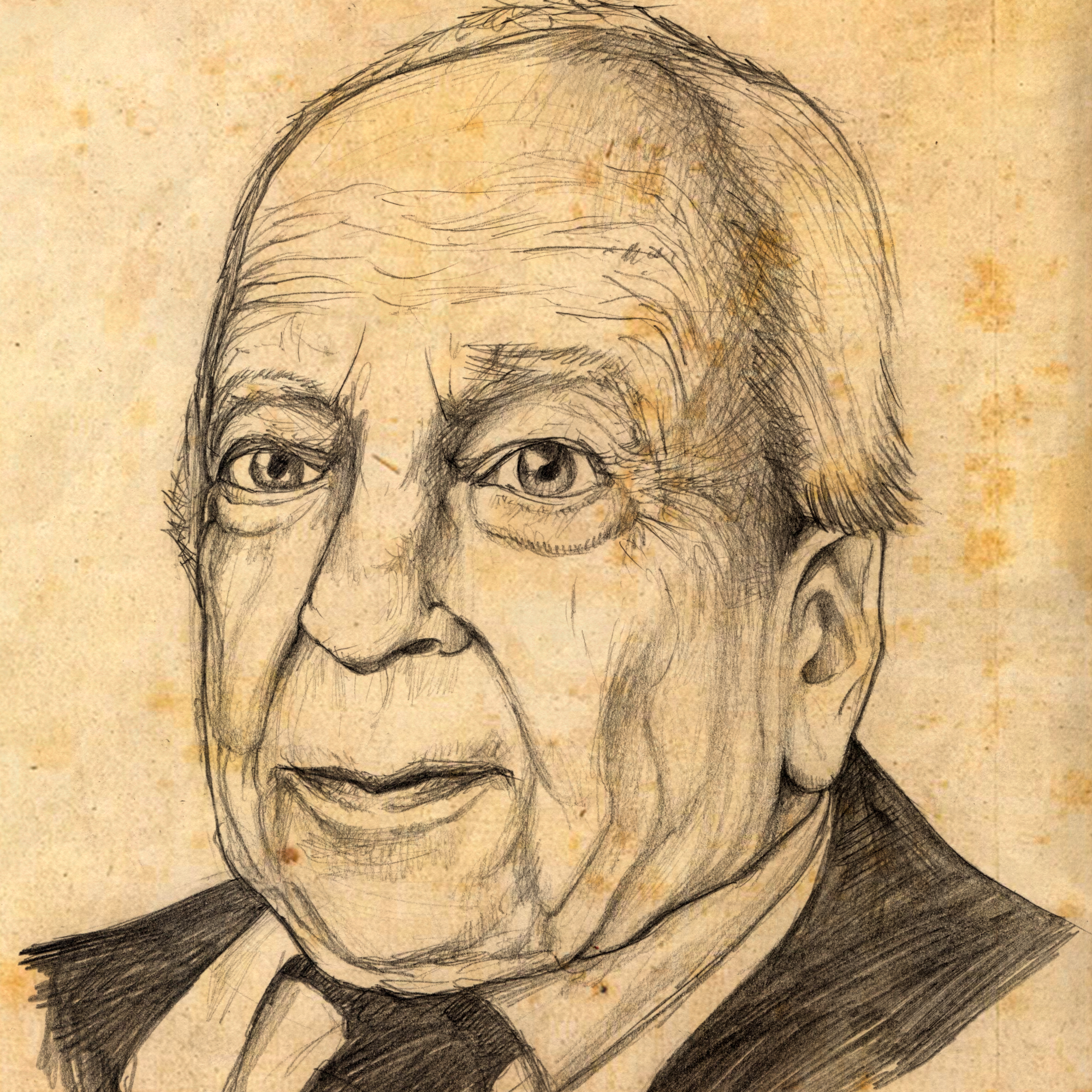
H.-G. Gadamer’s Truth and Method is a key text on hermeneutical theory. The newest English edition is a wonderful resource, but it’s not without problems.

The ability to “see what is questionable” and to ask questions accordingly is the first step in choosing a good research topic.

At first glance, rhetoric and hermeneutics are quite different things. But, if we look more closely, they comingle in a way that makes them inseparable.
Your research question can be known or unknown by your audience. But they need to have the question before you can answer it.
St. Johns Nottingham has a helpful introduction to the life and philosophy of H.-G. Gadamer.
Scripture can speak for itself. But, those with Christian education vocations are specially bound to pass on its testimony and interpretation for their milieux.
From the morass of the unfamiliar and strange, humans seem to acquire language or other forms of understanding by known quantities.
In his 1963 essay on the “Phenomenological Movement.” H.-G. Gadamer discusses at length Edmund Husserl’s influence in founding the school. In so doing, he recounts an interesting habit of Husserl’s that
In his teaching, whenever he encountered the grand assertions and arguments typical of beginning philosophers, he used to say, “Not always the big bills, gentlemen; small change, small change!” (133)
Gadamer does not wholly underwrite Husserl’s program, but he does helpfully observe that—perhaps as much for theology as for philosophy:
...Mike Aubrey has provided an excerpt from an essay of his in Linguistics & Biblical Exegesis (Lexham, 2016). The excerpt strives carefully to work out a middle ground that is neither wholly on the side of theological lexica nor on that of James Barr’s critique of them.
...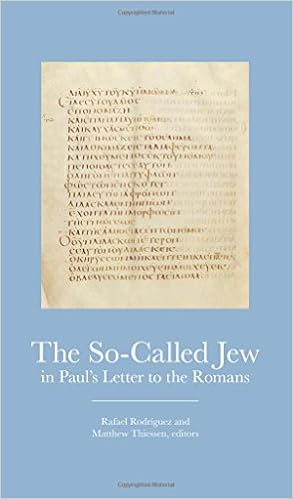 In addition to Boccaccini and Segovia’s Paul the Jew, inbox recently saw the arrival from Fortress Press of a review copy of Rafael Rodríguez and Matthew Thiessen’s edited volume The So-Called Jew in Paul’s Letter to the Romans(2016). According to the book’s blurb:

...The notorious statement, “The party (or the Leader) is always right” is not wrong because it claims that a certain leadership is superior, but because it serves to shield the leadership, by a dictatorial decree, from any criticism that might be true. ( 389n22)
[caption id=“attachment_2129” align=“alignright” width=“87”]  Richard Bauckham[/caption]
In his 2006 Jesus and the Eyewitnesses, Richard Bauckham suggests:
...that we need to recover the sense in which the Gospels are testimony. This does not mean that they are testimony rather than history. It means that the kind of historiography they are is testimony. An irreducible feature of testimony as a form of human utterance is that it asks to be trusted. This does not mean that it asks to be trusted uncritically, but it does mean that testimony should not be treated as credible only to the extent that it can be independently verified. There can be good reasons for trusting or distrusting a witness, but these are precisely reasons for trusting or distrusting. Trusting testimony is not an irrational act of faith that leaves critical rationality aside; it is, on the contrary, the rationally appropriate way of responding to authentic testimony. . . . It is true that a powerful trend in the modern development of critical historical philosophy and method finds trusting testimony a stumbling-block in the way of the historian’s autonomous access to truth that she or he can verify independently. But it is also a rather neglected fact that all history, like all knowledge, relies on testimony. ( 5; italics original)
Presuppositions that remain unacknowledged at least to oneself can still exercise strong influence. Indeed,
...[a] person who believes he is free of prejudices, relying on the objectivity of his procedures and denying that he is himself conditioned by historical circumstances, experiences the power of the prejudices that unconsciously dominate him as a vis a tergo. A person who does not admit that he is dominated by prejudices will fail to see what manifests itself by their light [because it will not be foregrounded from them] (Gadamer, Truth and Method, 2006, 354 and Gadamer, Truth and Method, 2013, 369).