
What English Readers Need to Know about Mistakes in Gadamer’s Truth and Method
H.-G. Gadamer’s Truth and Method is a key text on hermeneutical theory. The newest English edition is a wonderful resource, but it’s not without problems.
H.-G. Gadamer’s Truth and Method is a key text on hermeneutical theory. The newest English edition is a wonderful resource, but it’s not without problems.
St. Johns Nottingham has a helpful introduction to the life and philosophy of H.-G. Gadamer.
Mike Aubrey has provided an excerpt from an essay of his in Linguistics & Biblical Exegesis (Lexham, 2016). The excerpt strives carefully to work out a middle ground that is neither wholly on the side of theological lexica nor on that of James Barr’s critique of them.
...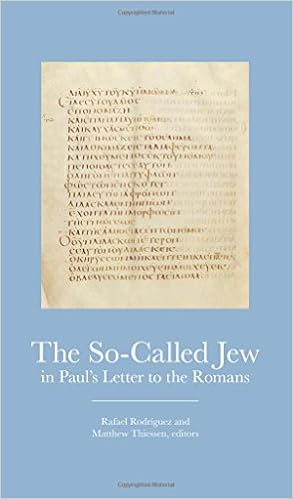 In addition to Boccaccini and Segovia’s Paul the Jew, inbox recently saw the arrival from Fortress Press of a review copy of Rafael Rodríguez and Matthew Thiessen’s edited volume The So-Called Jew in Paul’s Letter to the Romans(2016). According to the book’s blurb:

...The notorious statement, “The party (or the Leader) is always right” is not wrong because it claims that a certain leadership is superior, but because it serves to shield the leadership, by a dictatorial decree, from any criticism that might be true. ( 389n22)