Middleton on Psalm 51

Over on his blog, Richard Middleton abstracts his essay “A Psalm against David? A Canonical Reading of Psalm 51 as a Critique of David’s Inadequate Repentance in 2 Samuel 12” from Explorations in Interdisciplinary Reading: Theological, Exegetical, and Reception-historical Perspectives(Pickwick, 2017).

...

August 11, 2017 · 1 min · J. David Stark

Free books for March from Faithlife

Faithlife logo March’s free and reduced-price companion volumes from Faithlife include:

Logos: Paula Gooder, This Risen Existence: The Spirit of Easter, and for $1.99, Dennis Ngien, Fruit for the Soul: Luther on the Lament Psalms Verbum: Bonaventure, The Life of Saint Francis, and for $0.99, Bonaventure, Mystical Opuscula

...

March 2, 2017 · 1 min · J. David Stark

Free Book of the Month - Logos Bible Software

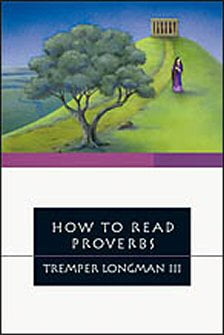
Tremper Longman, How to Read Proverbs For December 2016, Logos Bible Software’s free book is Tremper Longman’s How to Read Proverbs (IVP, 2002). The accompanying volume for $1.99 is Longman’s How to Read the Psalms (IVP, 1988).

...

December 1, 2016 · 1 min · J. David Stark

Review of Biblical Literature Newsletter (May 1, 2015)

The latest reviews from the Review of Biblical Literature include:

May 1, 2015 · 2 min · J. David Stark

Brueggeman, Spirituality of the Psalms

Walter Brueggemann,

Walter Brueggemann,

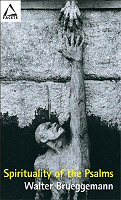
The June free book of the month seems already to be live on the Logos Bible Software website. The included text is Walter Brueggemann’s Spirituality of the Psalms (Fortress, 2001). The optional, $0.99 add on is Brueggemmann’s David’s Truth: In Israel’s Imagination and Memory (Fortress, 2002).

...

May 31, 2014 · 1 min · J. David Stark

Tempting a Hen to Play a Chick(en)

Jesus is both the properly trusting recipient of his Father’s care and the hen that would gather her chicks to protect them.

July 25, 2013 · 3 min · J. David Stark

Praying with Jesus

To demonstrate the superiority of Jesus’ sacrifice to those previously offered under the Torah, the writer to the Hebrews quotes a version of Ps 40:6–8 (Eng; 40:7–9 HB; 39:7–9 OG; Heb 10:5–9). 1 In so doing, Hebrews fairly clearly situates its rendition of this psalm’s words as Jesus’ own (cf. Heb 10:10). 2 If one were to read the entire psalm in this direction however, 3 problems would seemingly arise (e.g., vv. 12–17 Eng). 4

...

August 13, 2012 · 3 min · J. David Stark

My Glory

David between Wisdom and Prophecy

David between Wisdom and Prophecy

Psalm 7 is an individual lament, 1 and the superscript situates it as “concerning the words of Cush, the Benjaminite” ( Ps 7:1 HB; על־דברי־כושׁ בן־ימיני‎). 2 This situation is rather difficult to pinpoint precisely in the biblical narratives of David’s life. 3 The OG reading Χουσί is reflected in Augustine’s text and leads him to relate Ps 7 to 2 Sam 15:32–37. 4 Yet, this rendering seems as though it may suggest a different Vorlage than is available in the MT. 5

...

August 5, 2012 · 3 min · J. David Stark

On the Web (July 24, 2012)

On the web:

  • Tommy Wasserman notes a new iOS app for New Testament manuscripts.
  • E. K. McFall has the latest article in the Journal of Greco-Roman Christianity and Judaism: “Are Dionysos and Oedipus Name Variatnios for Satan and Antichrist?”
  • Dan Wallace recounts an experience of reading a manuscript that “doesn’t exist.”
  • Alin Suciu highlights Lorenzo Perrone’s lecture on recently-discovered texts of Origen’s homilies on the Psalms. For a selection of previous background posts, see here.

July 24, 2012 · 1 min · J. David Stark

David, the Man of God

In contemporary English parlance, to call someone a “man” or “woman of God” substantially means that individual is “godly” or “pious.” As such, the phrase is a descriptor of a person’s moral or religious standing in relation to some perceived measure.

In the Hebrew Bible, however, אישׁ (ה)אלהים ([the] man of God) regularly designates a “prophet.” To be sure, these prophets were often “godly” or “pious,” but even here, there were occasional exceptions to this behavior (e.g., 1 Kgs 13). Rather, when the Hebrew Bible applies this same phrase to David, it fits him into the framework of the broader tradition of the prophet as Yahweh’s representative ( Neh 12:24, 36; 2 Chron 8:14). In these particular texts, David’s status as an אישׁ אלהים (man of God) revolves around his plans for the temple’s administration. Even so, scarcely can at least the Davidic psalms be separated from vocation as a royal אישׁ אלהים (man of God). 1

...

July 1, 2012 · 1 min · J. David Stark

Origen on the Web (June 22, 2012)

On the web:

  • Jim Davila reports the discovery of some previously lost Greek homilies on the Psalms, potentially by Origen ( 1, 2).
  • Peter Williams provides a link to a set of images of the manuscript.
  • Roger Pearse comments on the press release and quotes Jerome’s catalogue of Origen’s writings.
  • Alin Suciu passes along a letter from Lorenzo Perrone, provides several updates on the discussion, and releases a guest post from Mark Bilby.
  • Dirk Jongkind comments on a textual variant in the text’s quotation of 1 Corinthians.

June 22, 2012 · 1 min · J. David Stark

Currents in Biblical Research 10, no. 3

The latest issue of Currents in Biblical Research includes:

  • J. Kenneth Kuntz, “Continuing the Engagement: Psalms Research Since the Early 1990s”
  • Joel R. White, “Recent Challenges to the communis opinio on 1 Corinthians 15.29”
  • Dan Batovici, “The Second-Century Reception of John: A Survey of Methodologies”
  • Benjamin Edsall, " Kerygma, Catechesis and Other Things We Used to Find: Twentieth-Century Research on Early Christian Teaching since Alfred"
  • Simon Lasair, “Current Trends in Targum Research”

June 19, 2012 · 1 min · J. David Stark