Ferdinand Christian Baur
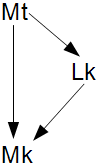
See Kümmel 139. Please see the symbol key for an explanation of the diagrams in this post series.
In this post:[caption id=“attachment_2014” align=“alignleft” width=“80” caption=“Werner Kümmel”]  [/caption]
See Kümmel 139. Please see the symbol key for an explanation of the diagrams in this post series.
In this post:[caption id=“attachment_2014” align=“alignleft” width=“80” caption=“Werner Kümmel”] [/caption]
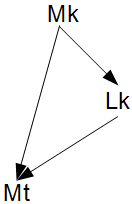
See Baird 305; Kümmel 148–49. Please see the symbol key for an explanation of the diagrams in this post series.
[caption id=“attachment_2065” align=“alignleft” width=“80” caption=“William Baird”]  [/caption] [caption id=“attachment_2014” align=“alignleft” width=“80” caption=“Werner Kümmel”] [/caption]

See Kümmel 327. Please see the symbol key for an explanation of the diagrams in this post series.
In this post:[caption id=“attachment_2014” align=“alignleft” width=“80” caption=“Werner Kümmel”] [/caption]
Early Holtzmann  Late Holtzmann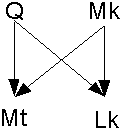
See Kümmel 151–55. Please see the symbol key for an explanation of the diagrams in this post series.
In this post:[caption id=“attachment_2014” align=“alignleft” width=“80” caption=“Werner Kümmel”] [/caption]
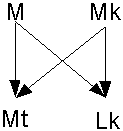
See Kümmel 149–51. Please see the symbol key for an explanation of the diagrams in this post series.
In this post:[caption id=“attachment_2014” align=“alignleft” width=“80” caption=“Werner Kümmel”] [/caption]
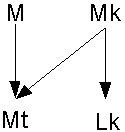
See Kümmel 146–48. Please see the symbol key for an explanation of the diagrams in this post series.
In this post:[caption id=“attachment_2014” align=“alignleft” width=“80” caption=“Werner Kümmel”] [/caption]

Eichhorn does not appear to have named Q as such, but this part of his hypothesis fits what has come to be called Q.
See Kümmel 77–79. Please see the symbol key for an explanation of the diagrams in this post series.
In this post:[caption id=“attachment_2014” align=“alignleft” width=“80” caption=“Werner Kümmel”] [/caption]

See Kümmel 76. Please see the symbol key for an explanation of the diagrams in this post series.
In this post:[caption id=“attachment_2014” align=“alignleft” width=“80” caption=“Werner Kümmel”] [/caption]
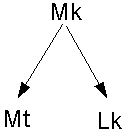
See Kümmel 75–76. Please see the symbol key for an explanation of the diagrams in this post series.
In this post:[caption id=“attachment_2014” align=“alignleft” width=“80” caption=“Werner Kümmel”] [/caption]
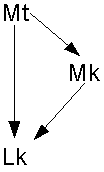
See Kümmel 75. Please see the symbol key for an explanation of the diagrams in this post series.
In this post:[caption id=“attachment_2014” align=“alignleft” width=“80” caption=“Werner Kümmel”] [/caption]
The following symbols, listed alphabetically, are used in the post series that summarizes solutions to the synoptic problem:
A, or UrMk – Urmarkus (a proto-Gospel of Mark)
Ar – Aramaic
frag – fragmentary
GosNaz – Gospel of the Nazarenes
Heb – Hebrew
L – a special, Lukan source
Lk – Luke
M – a special, Matthean source
Mk – Mark
Mt – Matthew
Or – an oral source
Q – a hypothetical source roughly consisting of non-Markan material common to Matthew and Luke
Sem – a document in a Semitic language (Hebrew or Aramaic)
Urev – Urevangelium (proto-Gospel)
UrLk – a proto-Gospel of Luke
X1, 2, 3, n (where X stands for a Gospel) – If X exists in more than one edition, higher numbers denote editions subsequent to the editions marked by earlier numbers. These later editions have edited one or more earlier editions in some way.
X → Y (where X and Y stand for different Gospels) – The author of Y used X when writing Y. Or, conversely, X provides a source for Y.
The ‘synoptic problem’ is a phenomenon that arises because the synoptic Gospels (Matthew, Mark, and Luke), while they contain so much similar material, do not always report the same material in the same way. Various solutions for the synoptic problem that have been proposed—so many that their nuances can be difficult to remember. This post series will attempt to compose a set of diagrams based on the summaries of these solutions that Kümmel, New Testament ( affiliate disclosure), provides.