Donnerstag Digest (August 19, 2010)

This week in the blogosphere:

  • James McGrath helpfully notes that John Byron, Associate Professor of New Testament at Ashland Theological Seminary, is now blogging at The Biblical World.
  • Sadly, Gerald Hawthorne passes away (HT: John Byron).
  • Helen Bond discusses the composition of the Sanhedrin in first-century Palestine.
  • Trevor provides a good summary of a variety of different ways to add records to Zotero.
  • Happy Dissertating suggests priming the writing pump as necessary via 750 Words. Based on what the site provides, it looks like a fully private blog could also be used in much the same way, but particularly for those who would prefer not to need to ensure for themselves that all their privacy settings are correct or who might enjoy some of the other features that 750 Words offers, the site may be worth a look.
  • Pat McCullough begins a bibliography of resources about the application of Social Identity Theory to biblical studies and invites suggestions for additions.

August 20, 2010 · 1 min · J. David Stark

Themelios 35.2

The mid-year issue of Themelios is now available, and it includes:

August 18, 2010 · 1 min · J. David Stark

Library Addition (August 13, 2010)

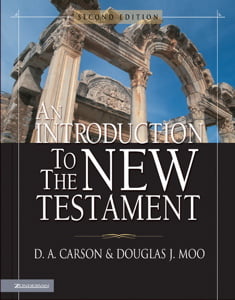
[caption id=“attachment_2049” align=“alignright” width=“100” caption=“D. A. Carson and Douglas Moo”] Introduction to the New Testament[/caption]

Thanks to the kind folks at Zondervan, I just received the second edition of D. A. Carson and Douglas Moo’s Introduction to the New Testament for use this fall. I had used the first edition (co-authored also with Leon Morris) when I took my initial New Testament Introduction course, so I will be interested (finally—this second edition has been available since 2005) to see firsthand what revisions have been made.

...

August 14, 2010 · 1 min · J. David Stark

RBL Newsletter (August 13, 2010)

The latest reviews from the Review of Biblical Literature include the following:

Jewish Scriptures and Cognate Fields

New Testament and Cognate Fields

...

August 14, 2010 · 2 min · J. David Stark

Donnerstag Digest (August 12, 2010)

This week in the blogosphere:

  • Baker acquires Hendrickson’s academic arm (HT: Nijay Gupta and Rod Decker).
  • Larry Hurtado rightfully lauds and recommends careful attention to Harry Gable’s Books and Readers in the Early Church.
  • Cynthia Nielsen continues her discussion of interconnections between Joerg Rieger and Frederick Douglass with a post about duality in identity construction.
  • Michael Halcomb has a new website specifically dedicated to Getting (Theological) Languages.
  • Kirk Lowery returns to the biblioblogosphere after a hiatus for the development of the Groves Center as an independent research unit. I had the privilege of doing an Aramaic and a Hebrew Bible text-linguistics seminar under Kirk and am again looking forward to seeing what shows up on his “scratchpad.”
  • Happy Dissertating suggests PhD2Published as a potentially valuable resource for new PhD graduates in humanities disciplines.
  • James McGrath spots several video recordings of presentations at this past year’s annual meeting of the American Academy of Religion.
  • Michael Bird starts reading a recent biography of Ernst Käsemann and reproduces several, brief quotations from Käsemann that are, as one might expect, particularly insightful.
  • Todd Bolen reports a recent spectrometric analysis that suggests a Jerusalem origin for a newly discovered cuneiform tablet.
  • Ken Schenck discusses the reading of biblical literature as Christian scripture.
  • Brian LePort discusses the relationship between scripture and tradition in view of the Trinitarian-Oneness debate. On this relationship, our Writing Center director at Southeastern recently brought to my attention F. F. Bruce’s edited volume, Holy Scripture and Holy Tradition. I have yet really to peruse it, and the book is scarcely findable in print at this point. Still, it does look like a very interesting volume, and much of it is available through Google Books.
  • Google and Verizon propose, regarding Net Neutrality,“that ‘wireline broadband providers [sh]ould not be able to discriminate against or prioritize lawful Internet content, applications or services in a way that causes harm to users or competition’, but broadband providers [sh]ould be able to offer ‘additional, differentiated online services’.”
  • Chris Brady shares some of his conclusions from his recent International Organization for Targumic Studies presentation about Boaz in Targum Ruth.

August 12, 2010 · 2 min · J. David Stark

Bulletin for Biblical Research 20.2

This year’s second issue of the Bulletin for Biblical Research arrived in the mail yesterday and includes the following:

  • Brian Gault, “An Admonition against ‘Rousing Love’: The Meaning of the Enigmatic Refrain in Song of Songs,” 161–84
  • William Wilder, “The Use (or Abuse) of Power in High Places: Gifts Given and Received in Isaiah, Psalm 68, and Ephesians 4:8,” 185–200
  • Gerald Peterman, “Plural You: On the Use and Abuse of the Second Person,” 201–14
  • Craig Keener, “Spirit Possession as a Cross-cultural Experience,” 215–36
  • Joshua Jipp and Michael Thate, “Dating Thomas: Logion 53 as a Test Case for Dating the Gospel of Thomas within an Early Christian Trajectory,” 237–56
  • Book reviews, 257–307

July 29, 2010 · 1 min · J. David Stark

RBL Newsletter (July 21, 2010)

The latest reviews from the Review of Biblical Literature include the following:

New Testament and Cognate Fields

Jewish Scriptures and Cognate Fields

...

July 22, 2010 · 1 min · J. David Stark

Mburu, Qumran and the Origins of Johannine Language and Symbolism

[caption id=“attachment_5648” align=“alignright” width=“80” caption=“Elizabeth Mburu”] Qumran and the Origins of Johannine Language and Symbolism[/caption]

Due out in a little less than one month is the revised version Elizabeth Mburu’s PhD thesis, Qumran and the Origins of Johannine Language and Symbolism. In the book, Mburu

sets out to demonstrate that the sectarian Qumran document The Rule of the Community, provides linguistic clues which illuminate our understanding of how the author of the Fourth Gospel used truth terminology and expected it to be understood.

...

July 19, 2010 · 1 min · J. David Stark

Oh, Yes, They Are

Christian Book Distributors is offering their 22-volume collection of Calvin’s commentaries for $99.99 (retail: $1200.00) with a bonus copy of Calvin’s Institutes. Also, starting November 1, CBD will offer a 14-volume set of Karl Barth’s Church Dogmatics for $99.99 (retail: $995.00). Even after accounting for shipping costs, the 90%+ discount offered on these sets’ retail prices still leaves them as strikingly good bargains.

...

July 16, 2010 · 1 min · J. David Stark

Koninklijke Bibliotheek on Google Books

According to Google’s blog, the National Library of the Netherlands will soon start making over 160,000 public-domain volumes available through Google Books. Works targeted for digitization “constitute nearly the library’s entire collection of out-of-copyright books, written during the 18th and 19th centuries.” Among the authors whose works this post explicitly notes as being included within this group is Abraham Kuyper (at least via a direct link to his Wikipedia page), the Dutch Reformed theologian, philosopher, and politician.

...

July 16, 2010 · 1 min · J. David Stark

Library Additions (July 15, 2010)

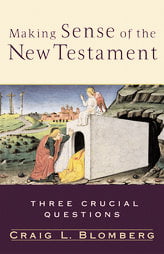
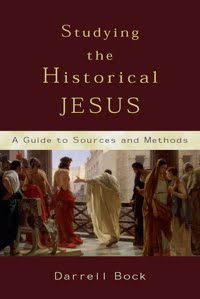
Today, the following arrived from the kind folks at Baker for use this fall:

[caption id=“attachment_5710” align=“alignleft” width=“80” caption=“Craig Blomberg”] Making Sense of the New Testament[/caption]

[caption id=“attachment_5709” align=“alignleft” width=“80” caption=“Darrell Bock”] Studying the Historical Jesus[/caption]

Being in the classroom (whether virtual or physical) is always enjoyable, and I am certainly looking forward to meeting and interacting with everyone there again this fall.

...

July 15, 2010 · 1 min · J. David Stark

RBL Newsletter (July 14, 2010)

The latest reviews from the Review of Biblical Literature include the following:

New Testament and Cognate Fields

Jewish Scriptures and Cognate Fields

...

July 14, 2010 · 2 min · J. David Stark

RBL Newsletter (March 25, 2010)

The latest reviews from the Review of Biblical Literature include the following:

New Testament and Cognate Fields

Jewish Scriptures and Cognate Fields

...

March 25, 2010 · 1 min · J. David Stark

RBL Newsletter (March 19, 2009)

The latest reviews from the Review of Biblical Literature include the following:

Jewish Scriptures and Cognate Fields

Hermeneutics

...

March 22, 2010 · 2 min · J. David Stark

Library Additions (March 16, 2010)

WTSBooks

Thanks to wonderful readers and the excellent folks at the Westminster Bookstore, the following arrived at our door this past week:

[caption id=“attachment_5466” align=“alignleft” width=“100” caption=“Kurt Aland”]Synopsis Quattor Evangeliorum[/caption] [caption id=“attachment_5467” align=“alignleft” width=“80” caption=“William Holladay”] Concise Hebrew and Aramaic Lexicon of the Old Testament[/caption] [caption id=“attachment_5468” align=“alignleft” width=“80” caption=“Warren Trenchard”]Vocabulary Guide to the Greek New Testament[/caption][caption id=“attachment_5464” align=“alignleft” width=“80” caption=“Miles Van Pelt and Gary Pratico”]Vocabulary Guide to Biblical Hebrew[/caption] [caption id=“attachment_5465” align=“alignleft” width=“80” caption=“Ronald Williams”] Hebrew Syntax[/caption]

...

March 16, 2010 · 1 min · J. David Stark

RBL Newsletter (March 10, 2010)

The latest reviews from the Review of Biblical Literature include the following:

New Testament and Cognate Fields

Jewish Scriptures and Cognate Fields

...

March 12, 2010 · 2 min · J. David Stark

RBL Newsletter (March 6, 2010)

The latest reviews from the Review of Biblical Literature include the following:

New Testament and Cognate Fields

Jewish Scriptures and Cognate Fields

...

March 8, 2010 · 2 min · J. David Stark

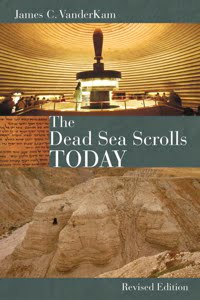
Today’s Dead Sea Scrolls Today

Dead Sea Scrolls Today

Dead Sea Scrolls Today

A revised edition of James VanderKam’s excellent introduction to the Dead Sea Scrolls is making its way to retailers. This new edition “retains the format, style, and aims of the first edition, and the same wider audience is envisaged” ( xii). Consequently, this edition includes five primary categories of changes ( xii–xiii):

...

February 26, 2010 · 1 min · J. David Stark

RBL Newsletter (February 20, 2010)

The latest reviews from the Review of Biblical Literature include the following:

New Testament and Cognate Fields

Hermeneutics

...

February 21, 2010 · 2 min · J. David Stark

RBL Newsletter (February 9, 2010)

The latest reviews from the Review of Biblical Literature include the following:

New Testament and Cognate Fields

Jewish Scriptures and Cognate Fields

...

February 9, 2010 · 2 min · J. David Stark

Logos Partners with Baker

This morning, Logos Bible Software announced an agreement with Baker Books that will soon allow Logos to bring “hundreds” of Baker titles into pre-publication. According to Logos’s normal procedure, once available on the Pre-Pub page, production will begin on a given title once a sufficient number of people have ordered that title at the Pre-Pub price. Some of the new Baker titles already available on the Pre-Pub page include:

...

February 5, 2010 · 1 min · J. David Stark

RBL Newsletter (February 4, 2010)

The latest reviews from the Review of Biblical Literature include the following:

New Testament and Cognate Fields

Jewish Scriptures and Cognate Fields

...

February 4, 2010 · 1 min · J. David Stark

Donaldson, “Explicit References to New Testament Variant Readings”

Amy Donaldson’s dissertation on Explicit References to New Testament Variant Readings among Greek and Latin Church Fathers is now available in PDF format through Notre Dame’s thesis and dissertation database. According to the abstract,

In his introduction to New Testament textual criticism, Eberhard Nestle stated a desideratum, later repeated by Bruce Metzger, for a collection, arranged according to time and locality, of all passages in which the church fathers appeal to New Testament manuscript evidence. Nestle began this project with a list of references; Metzger continued the work by examining the explicit references to variants by Origen and Jerome and expanding Nestle’s list. This dissertation picks up where Metzger left off, expanding and evaluating the list. The purpose is to contribute to patristics and New Testament textual criticism in two ways: first, by providing a helpful catalogue of patristic texts that refer to variant readings; and second, by analyzing the collected data with a focus on the text-critical criteria used by the fathers.

...

February 2, 2010 · 2 min · J. David Stark

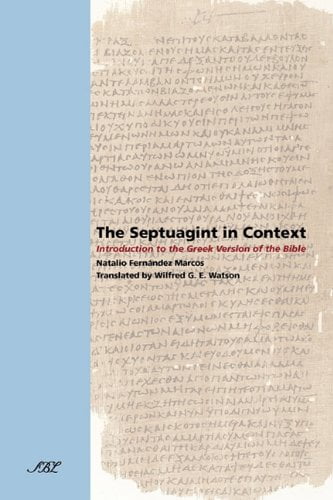
Marcos and Watson, “Septuagint in Context”

[caption id=“attachment_4657” align=“alignright” width=“80” caption=“Natalio Marcos and Wilfred Watson”] Septuagint in Context[/caption] The second edition of Natalio Marcos and Wilfred Watson’s Septuagint in Context: Introduction to the Greek Version of the Bible is now available in a somewhat more cost effective paperback from the Society of Biblical Literature. According to Brill, who has previously published the hardback edition,

...

February 2, 2010 · 1 min · J. David Stark

RBL Newsletter (January 22, 2010)

The latest reviews from the Review of Biblical Literature include the following:

New Testament and Cognate Fields

Hermeneutics and Cognate Fields

...

January 23, 2010 · 3 min · J. David Stark

Journal of the Evangelical Theological Society 52.4

The winter issue of the Journal of the Evangelical Theological Society arrived in the mail today and includes the following:

New Testament

  • Al Wolters, “ΑΥΘΕΝΤΗΣ and Its Cognates in Biblical Greek” 719–29
  • Nicholas Lunn, “Jesus, the Ark, and the Day of Atonement: Intertextual Echoes in John 19:38–20:18” 731–46
  • David Huttar, “Did Paul Call Andronicus an Apostle in Romans 16:7?” 747–78
  • Joseph Hellerman, “ΜΟΡΦΗ ΘΕΟΥ as a Signifier of Social Status in Philippians 2:6” 779–97

Jewish Scripture

...

January 12, 2010 · 1 min · J. David Stark

RBL Newsletter (December 31, 2009)

The latest, New Year’s Eve, reviews from the Review of Biblical Literature include the following:

New Testament and Cognate Fields

Hermeneutics and Translation

...

January 1, 2010 · 2 min · J. David Stark

RBL Newsletter (December 24, 2009)

The latest, Christmas Eve, reviews from the Review of Biblical Literature include the following:

New Testament and Cognate Studies

Hermeneutics and Cognate Fields

...

December 27, 2009 · 2 min · J. David Stark

“Early Readers of the Gospels”

Greg Goswell has the latest article in the Journal of Greco-Roman Christianity and Judaism, “Early Readers of the Gospels: The Kephalaia and Titloi of Codex Alexandrinus.” Goswell observes that “there is substantial variation among the codices [Vaticanus, Alexandrinus, and Sinaiticus] with regard to where [chapter] divisions are placed” (135) and argues that

A survey of the kephalaia in the four Gospels [of Alexandrinus] indicates that their placement is not haphazard but reflects an evaluation of the flow of the narratives and shows insight into the meaning of the story. Some breaks are close together, but others are widely separated. There are considerable differences in the length of the sections, reflecting a perception of the nature of the text by those responsible for the sectioning. Even a glance at the headings assigned to the kephalaia reveal the large element of commonality between the four Gospels (e.g. the headings of Mt. A6, Mk A4 and Lk. A12 that all read ‘Concerning the leper’), but they also bring to light, at times, what is distinctive about particular Gospels (e.g. the differing themes of the birth narratives in Matthew and Luke). . . . The function of a textual break in separating or joining material has at times provided . . . exegetical insights. One clear trend within all four Gospels is the highlighting of the element of the miraculous in the ministry of Jesus and (the reverse side of this) the downplaying of his teaching. The headings usually focus on the fact of controversy between Jesus and the religious leaders rather than what issues were controverted. The lack of attention given to dominical passion predictions and the paucity of divisions within the passion narrative itself suggest that there is little focus upon the suffering and atoning death of Jesus. Instead the divisions in the passion narratives reflect a homiletical tradition (or liturgical usage) in which there is a moralistic focus on positive and negative ethical examples (172–74).

...

December 4, 2009 · 2 min · J. David Stark

RBL Newsletter (November 30, 2009)

The latest reviews from the Review of Biblical Literature include the following:

New Testament and Cognate Studies

Jewish Scripture and Cognate Studies

...

December 3, 2009 · 2 min · J. David Stark