
 Jared Saltz did his PhD at Hebrew Union College-Jewish Institute of Religion.1
He currently preaches for the Smoky Hill Church of Christ in Denver, CO.
Jared’s essay describes how Hellenistic authors used ideas of kinship to foster unity both in general and particularly with the “Table of Nations” (Gen 10).
Jared Saltz did his PhD at Hebrew Union College-Jewish Institute of Religion.1
He currently preaches for the Smoky Hill Church of Christ in Denver, CO.
Jared’s essay describes how Hellenistic authors used ideas of kinship to foster unity both in general and particularly with the “Table of Nations” (Gen 10).
How did you come up with the idea for what you wanted to argue in your essay?
As is often the case for me, the idea for my essay came from reading primary texts. I was teaching Genesis in a congregational Bible study while also teaching Greek history and literature for a college course. I noticed that the structures and goals for the Table of Nations looked far more “Greek” than they did like many other genealogies of the Hebrew Bible and started digging!
Did you divide your process between research and writing? If so, how?
I try to do my best to have as much research as possible concluded before I begin writing. I want to make sure I
- know the lay of the land,
- have a working outline, and
- don’t stumble into research gaps or places where someone has already written what I hoped to write (I’ve been burned by that before!).
However, inevitably, as I begin the hard process of actually putting down my argument, I find areas where I need to
- go back and fill a hole or
- better understand a position or
- find some additional evidence to make a point I think is true.
That sends me back to the research drawing board.
How did you structure the time you needed to research and write the essay? How did you coordinate work on this project around or alongside other commitments?
I try and stick to schedules for the different portions of research, writing, and editing for essays, even if they tend to revolve around what my teaching schedule for that semester looks like. So, for example, this time around I had carved out a few hours a week to do initial research, resource gathering, etc., quite early. Then I spent each Tuesday night reading my gathered sources and making notes for what else to work through.
But I also took advantage of spring break with its larger chunks of available time to sit down and write the bulk of the essay. Doing so provided a few weeks for some friends to read it and me to further edit it after. This editing process always tends to continue indefinitely until the due date, and it certainly was the case for this essay.
How did work on this essay contribute to, draw from, or otherwise complement your work in your church?
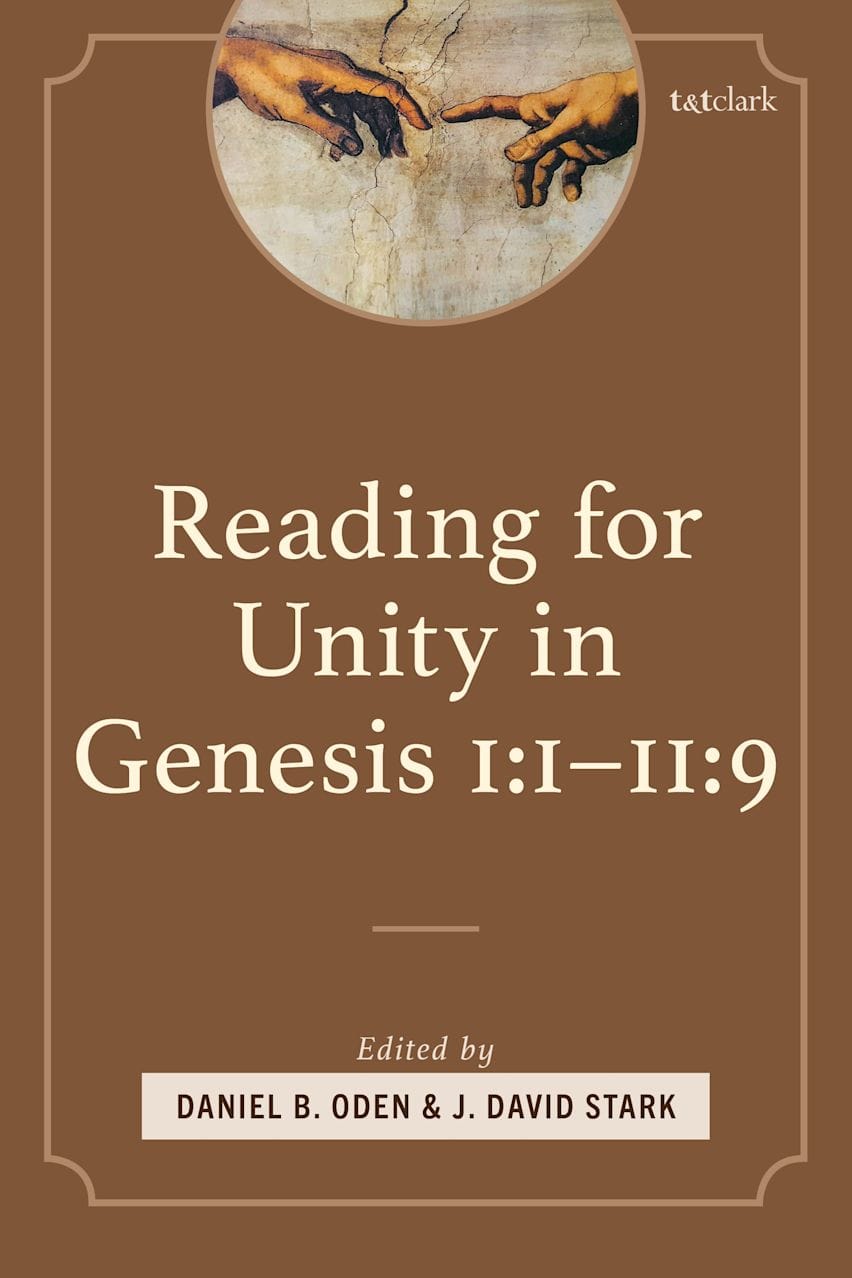 My essay contributed to my church work in two distinct ways.2
The first, and most immediately applicable way, was through the additional research I did for genealogies in the Bible in general and in Genesis in particular.
I was teaching Genesis and often teach Hebrew Bible at my congregation.
So providing me the time and impetus to better research and understand the various biblical genealogies was quite useful.
My essay contributed to my church work in two distinct ways.2
The first, and most immediately applicable way, was through the additional research I did for genealogies in the Bible in general and in Genesis in particular.
I was teaching Genesis and often teach Hebrew Bible at my congregation.
So providing me the time and impetus to better research and understand the various biblical genealogies was quite useful.
But the more influential—if less direct!—way work on my essay contributed to my work in the church is that it helped provide me with the language for talking about unity. It helped me see ancient and modern approaches to unity and the desire for it while also respecting that differences do exist and that differentiation can also be important, so long as it is properly understood, harnessed, and communicated. Those ideas have found a firm place in my preaching and teaching well beyond any specific Bible class or sermon.
How did you handle feedback from the editors? How did you handle reviewing and responding to proofs?
I was lucky to have excellent editors. I thought all of their remarks were fair, that they made the essay more compelling and more cogent, and all of their requests were reasonable. That isn’t always the case, but it was with Daniel and David, for which I’m thankful.
When working on your essay, what tools did you use?
I tend to be systems-heavy with my projects, and even if the particulars may vary, the process tends to remain the same.
I have specific folders for different projects where I file PDFs of all the articles, chapters, etc., of all my sources, and these follow a standard nomenclature and filing. I sub-file different sections for each part of the essay and further sub-categorize them based on where each sits in the research process. I then tag everything within the bibliographic entries in Zotero to help me keep track of everything.
Lastly, all of my (substantial … perhaps too substantial at times) notes go into article-tagged parts of a Scrivener project arranged by date. I’ve found these systems make it much easier for me to keep everything in front of me and remove friction when it comes to the time to write.
What closing advice would you offer to emerging biblical scholars as they work on papers for academic conferences and collaborative volumes like Reading for Unity in Genesis 1:1–11:9?
The single most importance piece of advice that I’d give is “do it.” I think that early career scholars and late graduate students tend to have so much imposter syndrome that it can paralyze them and keep them from working on projects and getting their work out there.
That doesn’t mean that I think they should expect everything that they do to be worthwhile. (Everything needs to be paired with humility!) But I do think that, if they find the right conference, section, and mentors, they’ll find a community that wants them to succeed and would love to incorporate them. That’s been my frequent experience, especially at the conference and the section that spawned my work on this essay.
As for work in collaborative volumes, I think a lot has to do with understanding the field as a whole and your place in it. You won’t be (or be able to be) an expert at every element therein, but you need to understand the big picture well enough to be able to understand your place in it. That comes from reading broadly and not just reading deeply.
Discuss on Mastodon.
-
Header image provided by Brett Jordan. Headshot provided by LinkedIn. ↩︎
-
Image provided by Bloomsbury. ↩︎