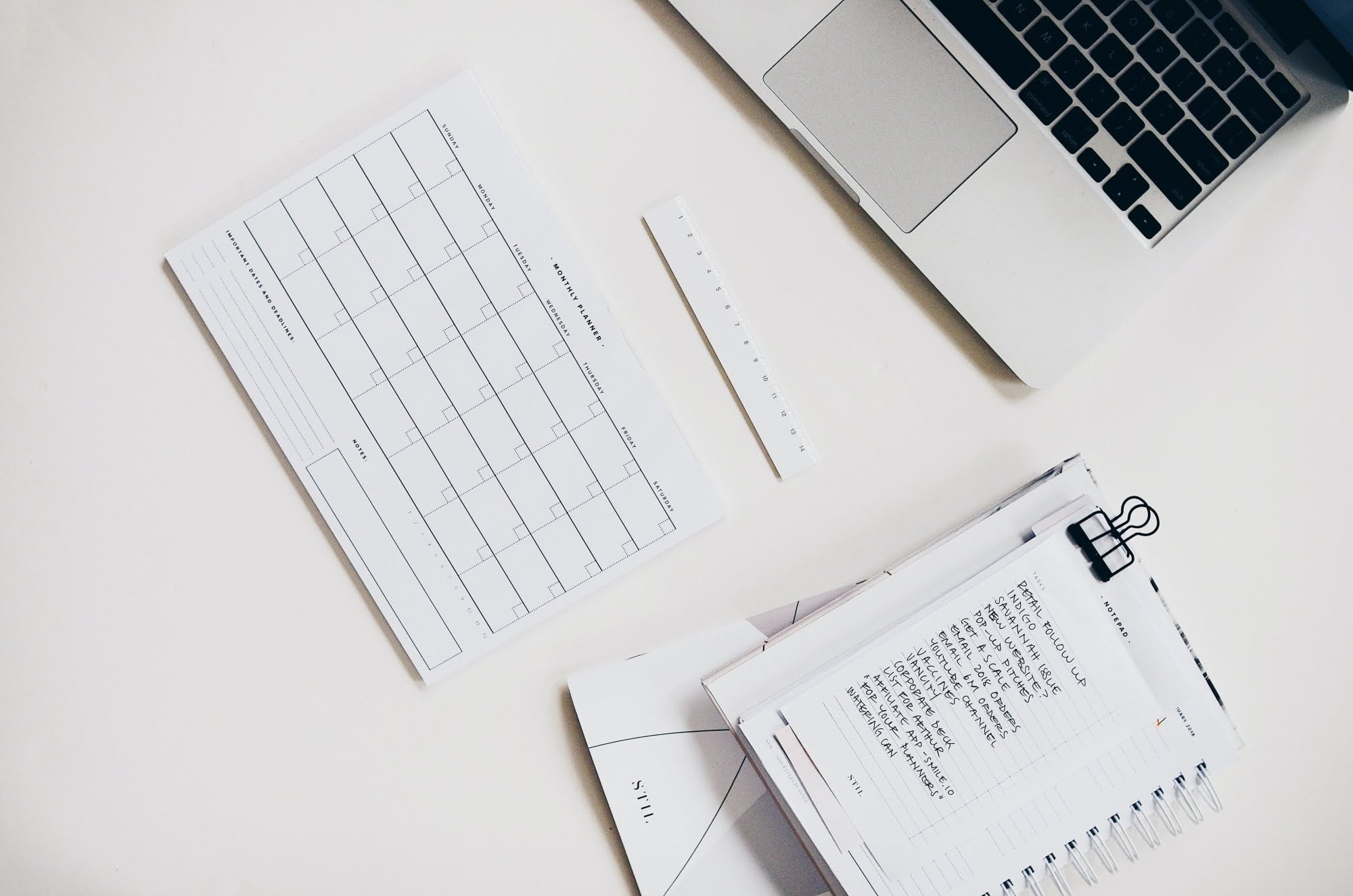
Budgeting time requires different strategies for different contexts and schedules.((Header image provided by STIL.))
Your schedule might be regular, irregular, or some of both. But whatever it looks like, there’s a corresponding strategy you can use to budget your time.
Still, saying all of that leaves out one very important question: Do you really need to budget your time in the first place?
Reasons You Need to Budget Your Time
I’d like to suggest that the answer to this question is a firm “Yes” for at least four reasons.((I’m here using the metaphor of financial budgeting as described, for example, in Financial Peace University; “ 10 Budgeting Myths You May Be Falling For,” Dave Ramsey, n.d.; “ What Is a Budget?,” Dave Ramsey, n.d.; “ A Zero-Based Budget: What and Why,” Dave Ramsey, n.d.))
In particular, you need to budget your time in order to
- Manage your commitments because your time is limited, but your possible commitments are unlimited.
- Get the most out of it not only by doing more things but also—and more importantly—by doing more important things.
- Avoid schedule crises. Schedules don’t always go to plan. And if you haven’t balanced your scheduling budget in advance, you’ll find yourself in larger crises more often when the unexpected arrives.
- Avoid guilt and shame. You will spend your time. How you spend it reflects what you chose or endorsed as a priority. If you spend your time intentionally, you will disappoint someone at some point. But you don’t have to feel guilt or shame about that if you know you’ve done your best to choose what’s most important.
Conclusion
In short, you can spend your time intentionally. Or it will get spent for you.
Intentionality is critical to knowing what you should do with the time you have. And creating a time budget can help you ensure you’re making the choices about your time that you really feel are the best.
Thanks, Percival. I’m glad you found this post helpful. It’s all too easy for our calendars to get swept up into and occupied by things that we really wouldn’t prioritize unless we’re intentional about orienting our time and lives around what we do want to prioritize.
All the best for your ministry and family.
Thanks for sharing your thoughts, Matthew. I’ve certainly experienced some of the same kinds of things you’re mentioning as well. In case it might be helpful, I might suggest that:
The goal isn’t to create a “perfect” plan, or let alone a planner (though the more complex life is the more helpful it is to have an “external brain” that works for you). When things come up to derail what you’d planned, you adjust as the situation requires and come up with a new plan. That’s just as intentional a practice as if your first plan had worked—we just aren’t always good enough predicters of the future to be sure we have all the information the first go round (e.g., 2020? ;-)).
At the same time, when something’s caught me by surprise, I’ve also learned that I really should have been able to anticipate it ahead of time. The next time around, I try to do better at budgeting for how things actually went, what else I’ve learned about how much buffer really is good to have to cushion against the “unknown,” etc.
I doubt that any of this is something where any of us ever finally “arrives” and has it all down. But as you’ve mentioned, the point is to live intentionally, to make the most of the days we have, and by continuing to keep an eye on that goal (however haltingly and indirectly sometimes), I do think we can make some very real progress in stocking our days more with the kinds of things that really count.
I’m not sure if any of that’s at all helpful, but I wanted to share at least a bit more from my own experience in case that might be helpful as well.
All the best to you and yours.
Glad you found the additional comments helpful, Matthew. We all do tend to be rather more prone, I think, to thinking time will stretch farther than it does. :-) But having some (comparatively) fixed guideposts to orient oneself around can be very helpful. Then, as days unfold from there, a schedule can as well—much like “balancing” or “focusing” isn’t ever a constant static state but one of constant micro-adjustments toward a static goal.
All the best.