Frame, “Salvation belongs to the Lord” free from Logos
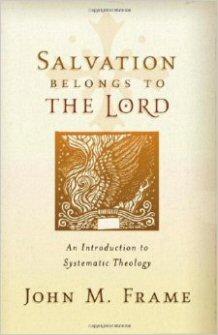 At Logos Bible Software, this month’s free book is John Frame’s Salvation Belongs to the Lord: An Introduction to Systematic Theology (P&R, 2006). According to the book’s blurb,
At Logos Bible Software, this month’s free book is John Frame’s Salvation Belongs to the Lord: An Introduction to Systematic Theology (P&R, 2006). According to the book’s blurb,

This month’s free book from Logos Bible Software is Stephen Westerholm’s Justification Reconsidered: Rethinking a Pauline Theme (Eerdmans, 2013). Those who get this free volume are also eligible to purchase Douglas Campbell’s massive The Deliverance of God: An Apocalyptic Rereading of Justification in Paul(Eerdmans, 2013) for only $0.99.
...Hans Iwand,
This month, Logos Bible Software is giving away Hans Iwand’s The Righteousness of Faith according to Luther (trans., Randi Lundell; Wipf & Stock, 2008, originally published in 1941). According to the product page, the volume:
...Since Michael Bird’s books are still in transit, cross-checking with Piper’s Future of Justification, 24–25 n. 30 ( PDF), that Bird’s post (“Justification - Publications and Conferences”) mentions, here is the relevant Jonathan Edwards quote to accompany the other excellent remarks in Bird’s post:
...Douglas Campbell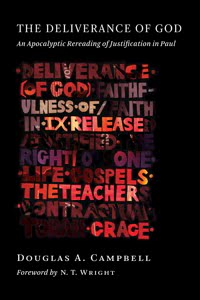
Douglas Campbell’s new book, The Deliverance of God: An Apocalyptic Rereading of Justification in Paul, has come to publication at Eerdmans. The publisher’s description reports that:
...In this scholarly book Douglas Campbell pushes beyond both “Lutheran” and “New” perspectives on Paul to a noncontractual, “apocalyptic” reading of many of the apostle’s most famous-and most troublesome-texts.
Campbell holds that the intrusion of an alien, essentially modern, and theologically unhealthy theoretical construct into the interpretation of Paul has produced an individualistic and contractual construct that shares more with modern political traditions than with either orthodox theology or Paul’s first-century world. In order to counteract that influence, Campbell argues that it needs to be isolated and brought to the foreground before the interpretation of Paul’s texts begins. When that is done, readings free from this intrusive paradigm become possible and surprising new interpretations unfold.