Overlooking Details in Biblical Literature
Biblical interpreters must always be alert to when the text begins to disappoint the fore-meanings they bring to it.
Biblical interpreters must always be alert to when the text begins to disappoint the fore-meanings they bring to it.


Earlier this month, Rick Brannan posted an analysis of the most frequently cited in a selection of systematic theologies. Rick has since made available on his blog the bibliography of systematic theologies that fed this analysis.
Meanwhile, Christianity Today picked up the post for further discussion. According to CT,
...

Available in Fortress’s Ad fontes series is Biblical Interpretation in the Early Church, edited by Michael Graves.
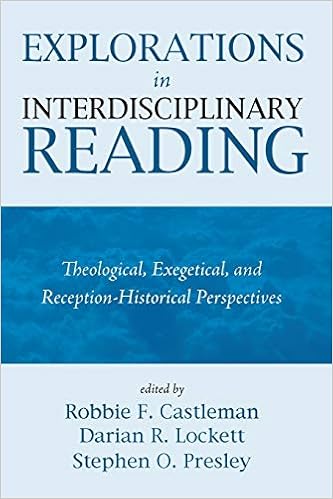 Explorations in Interdisciplinary Reading: Theological, Exegetical, and Reception-historical Perspectives, edited by Robbie Castleman, Darian Lockett, and Stephen Presley, appeared under Wipf and Stock’s Pickwick in 2017.
The volume includes essays assembled through the Institute for Biblical Research’s recently concluded study group on Biblical Theology, Hermeneutics, and Theological Disciplines.
...For April, Logos Bible Software’s “free book of the month” and discounted companion focus on Scripture in its cultural contexts.
 The free text is Randolph Richards and Brandon O’Brien’s Misreading Scripture with Western Eyes: Removing Cultural Blinders to Better Understand the Bible (IVP, 2012). According to the book’s blub: