Logos 4.5 (SR3) is now available with a couple minor bug fixes. For the change log, see here. Also, February’s free resource is now available: The Works of B. B. Warfield (Vol. 1: Revelation and Inspiration).
Review of Biblical Literature Newsletter (January 31, 2011)
[caption id="" align=“alignright” width=“75” caption=“Image via Wikipedia”] [/caption]
Theodor Zahn’s Kommentar zum Neuen Testament volume on Romans (1910) is available freely in several formats from Internet Archive, and his volume on Galatians (1905) is available freely in PDF format from Google Books. The bibliographic information for both is available here (BibTeX).
...
Zotero 3.0 Stable
[caption id="" align=“alignright” width=“175” caption=“Image via CrunchBase”] [/caption]
Zotero 3.0 marks a major departure from previous versions, most notably with the new ability run outside the Firefox browser. Available for Mac, Windows, and Linux, this standalone version of Zotero contains all the great functionality of the old Firefox-based Zotero but now enables users to integrate Zotero into browsers other than Firefox like Google Chrome and Apple Safari. To all you Firefox lovers out there, no need to worry! Zotero continues to work within Firefox, and even if you choose to run the standalone version, it will talk to Firefox, too.
The standalone version of Zotero isn’t the only major news: Zotero 3.0 is loaded with other new features. Duplicate detection, heavily requested over the last few years, has finally made an appearance. We hope you’ll agree it has been worth the wait: an elegant interface allows users to find and merge duplicate items. Also arriving with Zotero 3.0 is slick new word processor integration. A streamlined dialog box allows users to add and references to documents quickly and efficiently (and it’s pretty, too). References in word processing documents are also now easily shareable with other Zotero users without using groups and even with people using other compatible software.
...
Not up to Seven Times
[caption id="" align=“alignright” width=“200” caption=“Depiction of the Parable of the Unmerciful Servant (Image via Wikipedia)”] [/caption]
The interchange in Matt 18:21–22 looks back to Jesus’ immediately preceding comments on handling a community member (ἀδελφός) who sins ( Matt 18:15–20; Chrysostom, Hom. Matt., 61.1 [NPNF1 10:357]; cf. Matt 18:21; 19:1). Read within this context, Peter’s question ποσάκις ἁμαρτήσει εἰς ἐμὲ ὁ ἀδελφός μου καὶ ἀφήσω αὐτῷ; ( Matt 18:21a; How many times* shall my brother sin against me and I forgive him?) addresses a very plausible ambiguity in Jesus’ preceding comments. Judging from this question, Peter presumably thinks it inappropriate for a community member endlessly to sin and repent, but as long as some repentance was involved, Jesus’ instructions could seem never to allow further action to be taken. As many times as the community member would sin and repent, this member would also be restored ( Matt 18:15b; Chrysostom, Hom. Matt., 61.1 [NPNF1 10:357]).
...
On the Web (January 28, 2011)
On the Web:
Alin Suciu provides a PDF of the now public-domain R. Draguet, Julien d’Halicarnasse et sa controverse avec Sévère d’Antioche sur l’incorruptibilité du corps du Christ(Louvain: Smeesters, 1924). The bibliographic entry is available here (BibTeX).
Google Books has Adolf Deissman’s Bible Studies(trans. Alexander Grieve; Edinburgh: T. & T. Clark, 1903) available for download in PDF format. The bibliographic entry is available here (BibTeX).
Jim Davila notes a couple updates about recent stories of Jewish manuscript finds in Afghanistan ( 1, 2), as does John Byron.
John Byron reflects on a selection from Thomas à Kempis and lectures on rewritten Bible.
Marc Cortez discusses “How to Reject a Rejection Letter,” announces a series on the value of blogging, and begins this series by considering how blogging can improve writing.
Despite what was apparently some earlier confusion about the timing of the release, Logos 4.5 is now shipping. This significant update mainly introduces improvements in highlighting and note taking, but it contains several other improvements also. For the full release notes, see here.
Jim Davila notes the completion of Sheffield’s Dictionary of Classical Hebrew.
Daniel Roth highlights five articles about SOPA, including John Gaudiosi’s report of the White House’s disapproval of the bill as it stands.
Hays, “Unexpected Echoes”
Kerry Lee digests Richard Hays’ lecture, “Unexpected Echoes: Reading Scripture with Mark,” from Tuesday, January 17. Kerry’s previous lecture summary and comment are here.
New Romans Fragment
New within the past few days in Hobby Lobby’s collection of biblical antiquities is a small fragment from Rom 9– 10 (HT: Peter Williams). For the fragment’s brief spot on CNN, see here. The fragment’s proposed date is the mid-second century. The side displayed in the CNN footage contains five lines. The image quality isn’t fantastic, but the last letters on the fragment look like they could be ΕΚΤΟΥ, which could seem to put that part of the fragment at Rom 9:12 or 21. If line 3 begins ΚΡΙ and line 4 ends ΗΣ*ΣΟΥ, could we then be looking at Rom 9:20–21 here?
...
Journal of the Evangelical Theological Society 54, no. 4
[caption id="" align=“alignright” width=“125” caption=“Image via Wikipedia”] [/caption]
Al Wolters, “An Early Parallel of αὐθεντεῖν in 1 Tim 2:12”
Michael Harbin, “Jubilee and Social Justice”
Gary Smith, “Isaiah 40–55: Which Audience Was Addressed?”
Don Garlington, " ‘Salt of the Earth’ in Covenantal Perspective"
Gavin Ortlund, “Resurrected as Messiah: The Risen Christ as Prophet, Priest, and King”
Eric Johnson, “Rewording the Justification/Sanctification Relation with Some Help from Speech Act Theory”
Jason Sexton, “The State of the Evangelical Trinitarian Resurgence”
Bruce Davidson, “Glorious Damnation: Hell as an Essential Element in the Theology of Jonathan Edwards”
והיתה בריתי בבשׂרכם לברית עולם
Abraham
In Gen 17:13, God tells Abraham that his whole household was to be circumcised והיתה בריתי בבשׂרכם לברית עולם (and my covenant will be in your flesh as an everlasting covenant). Yet, Paul strongly opposes Gentiles’ submitting to circumcision in connection with their membership in the Christian community (Galatians) and asserts that ὁ ἐν τῷ κρυπτῷ Ἰουδαῖος, καὶ {ὅτι} περιτομὴ καρδίας ἐν πνεύματι οὐ γράμματι ( Rom 2:29; the Jew is one who is such inwardly, and [that] circumcision is of the heart by the Spirit, not by the letter). What then becomes of the בבשׂרכם []ברית עולם ( Gen 17:13; everlasting covenant in your [= Abraham’s household’s] flesh)? It is precisely there because of the circumcision of Abraham’s messianic seed ( Gal 3:16), ἐν ᾧ καὶ περιετμήθητε περιτομῇ ἀχειροποιήτῳ ἐν τῇ ἀπεκδύσει τοῦ σώματος τῆς σαρκός, ἐν τῇ περιτομῇ τοῦ Χριστοῦ ( Col 2:11; in whom you also were circumcised with an unhandmade circumcision in the removal of the body of the flesh, in the circumcision of the Messiah; cf. Gal 3:23–29; Bede, Genesis, 284 [ affiliate disclosure]; Chrysostom, Hom. Col. 6 [ NPNF1 13:285; affiliate disclosure]; Cyril of Alexandria, Catena on Genesis[ ACCOT 2:56; affiliate disclosure]; Theodore of Mopsuestia, Colossians [ ACCNT 9:32; affiliate disclosure]).
...
2012 Faith and the Academy Conference
[caption id="" align=“alignright” width=“125” caption=“Image via Wikipedia”] [/caption]
This year’s Faith and the Academy conference program is now available. The conference is hosted annually by Faulkner University. This year’s theme is “Money, Morals, and Missions,” and the plenary sessions will feature Shawn Ritenour of Grove City College and Monty Lynn of Abilene Christian University. In the last morning session, I am also privileged to be giving a paper on “Physical Humanities and Lettered Sciences: Thomas Kuhn’s Significance for Contextualizing Biblical Studies.” For more information about the conference and to register, please see here.
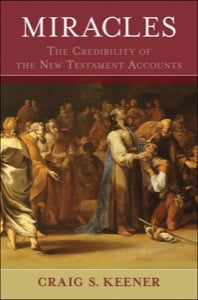
Ever helpful, the folks at the Westminster Bookstore have made available a PDF sample from Craig Keener’s Miracles: The Credibility of the New Testament Accounts(2 vols.; Baker, 2011) on the book’s product page. The sample contains the work’s table of contents, introduction, and first chapter.
...
Hahn, Bibliothek der Symbole und Glaubensregeln der Apostolisch-katholischen Kirche
[caption id="" align=“alignright” width=“75” caption=“Image via Wikipedia”] [/caption]
Google Books has available a full-text PDF of August Hahn’s Bibliothek der Symbole und Glaubensregeln der Apostolisch-katholischen Kirche(Breslau: Grass und Barth, 1842).
Viewing Nonprinting Characters in LibreOffice
[caption id="" align=“alignright” width=“150” caption=“Image via Wikipedia”] [/caption]
Apparently, recent versions of LibreOffice have a slightly different defaults for what nonprinting characters will display in a document. Instructions for customizing these settings are available here.
Changing Zotero Standalone’s Default PDF Viewer in Ubuntu
Apparently, the Gnome desktop environment for Linux systems has an issue with handling some user-specified default application choices. When using Zotero in Ubuntu, therefore, it may be necessary to edit /etc/gnome/defaults.list manually in order to have Zotero default to a PDF viewer besides Evince (e.g., Okular). Changing the “application/pdf=evince.desktop” line in this file to reflect the desired PDF viewer default (e.g., “application/pdf=kde4-okularApplication_pdf.desktop”) seems to do the trick, however. For more information, please see Zotero’s help forums and knowledge base.
...
Gadamer on Prejudicial Frameworks
Philosophical Hermeneutics
According to Hans-Georg Gadamer,
Prejudices [i.e., prejudgments] are not necessarily unjustified and erroneous, so that they inevitably distort the truth. In fact, the historicity of our existence entails that prejudices, in the literal sense of the word [i.e., prejudgments], constitute the directedness of our whole ability to experience. Prejudices are biases of our openness to the world. They are simply conditions whereby we experience something—whereby what we encounter says something to us.((Gadamer, Philosophical Hermeneutics ( affiliate disclosure), 9.))