Dan Wallace Comments on Recent Manuscript Discoveries
Via Michael Bird:
Via Michael Bird:
The latest reviews from the Review of Biblical Literature include:
Jewish Scriptures and Cognate Studies
New Testament and Cognate Studies
...From Larry Hurtado:
...[A]nother dreadful “thought for today” on Radio 4 this a.m., this one ostensibly taking as its pre-text (and I use the word advisedly) that today is Ascension Day, and opining that Jesus’ Ascension (portrayed solely in Luke-Acts in the NT) means that Jesus has deaked out and we’re on our own! So, children, the moral lesson is that we should just face up to it and learn to cope. Hmm. Well, just goes to show you what the exegetical equivalent of a drive-by-shooting can produce!
Homer was also called Melesigenes (son of Mele…
Charles Jones notes that
...Homer and the Papyri, first created by Professor Dana Sutton of the University of California, Irvine, is . . . published [online] in a second electronic edition. The new edition consists of a fully searchable relational database of Homeric papyri.
It seems like I’ve seen the site before, but Gideon Burton at Brigham Young University has digested a good deal of information about classical and Renaissance rhetoric at Silva Rhetoricae: The Forest of Rhetoric. The site “is intended to help beginners, as well as experts, make sense of rhetoric, both on the small scale (definitions and examples of specific terms) and on the large scale (the purposes of rhetoric, the patterns into which it has fallen historically as it has been taught and practiced for 2000+ years).”
...Journal of the Evangelical Theological Society
The latest issue of the Journal of the Evangelical Theological Society arrived in yesterday’s mail and includes the following:
Bauckham, Davila, and Panayotov< ‘Old Testament Pseudepigrapha’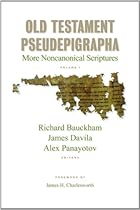
From Nijay Gupta,
...The time is soon-coming for the release of the long-anticipated Old Testament Pseudepigrapha: More Noncanonical Scriptures edited by Bauckham, Davila, and Panayotov (Eerdmans, Nov 2012). . . .
At more than 800 pages (in 2 volumes), it will certainly be substantive. The attempt was made by the editors to collect non-canonical texts that pre-date the rise of Islam. (underlining for original italics)
There is now
...an iPad app for introductory and intermediate Greek readers. Its name is Attikos and it includes a selection of familiar texts, including morphological information. The author is Josh Day, himself recently an intermediate Greek student.
Link to the app store page:
http://itunes.apple.com/us/app/attikos/id522497233?mt=8
. . .
Texts include the Iliad, some Lysias and Plato, and the Antigone. Some texts have been parsed completely; no translations are included, however.
[caption id="" align=“alignright” width=“200” caption=“Domenico Fetti, “Parable of the Good Samaritan” (c. 1610–1623; photo credit: Wikipedia)”]  [/caption]
The parable of the Good Samaritan ( Luke 10:30–35) is unique to Luke and contributes to the third Gospel’s general emphasis on socially marginalized characters and groups. 1 Introducing the parable proper is an exchange between Jesus and a νομικός (lawyer), which the lawyer begins by inquiring τί ποιήσας ζωὴν αἰώνιον κληρονομήσω; ( Luke 10:25b; what shall I do to inherit eternal life?). Both this question and the exchange that follows resemble some later rabbinic texts, not least in the lawyer’s concern to define proper Torah obedience. 2
...The latest reviews from the Review of Biblical Literature include:
Jewish Scriptures and Cognate Studies
New Testament and Cognate Studies
...The latest reviews from the Review of Biblical Literature include:
New Testament and Cognate Studies
Jewish Scriptures and Cognate Studies
...[caption id="" align=“alignright” width=“250” caption=“15th-c. Illumination (Photo credit: Wikipedia)”]  [/caption]
First Samuel 18:6 describes David’s return after killing Goliath ( 1 Sam 17:41–58). Precisely how this event sits chronologically in relationship to the surrounding narrative is difficult to establish. 1 One good way of reading the narrative, however, involves treating 1 Sam 18:1–5 as an extended parenthesis, which includes some foreshadowing, and understanding 1 Sam 18:6 to be bringing the reader back to the main plot line that had temporarily paused with 1 Sam 17:58. 2 In this context, it begins to be said הכה שׁאול֙ באלפו ודוד ברבבתיו ( 1 Sam 18:7; Saul has slain by his thousands and David by his ten thousands; see also 1 Sam 21:11; 29:5). 3 Yet, thus far, David has specifically been reported to have killed only one person (Goliath) and some animals ( 1 Sam 17:34–37)—not רבבת (ten thousands). 4 Rather, the women’s song quantitatively represents the qualitative value of David’s victory over Goliath as it relates to Saul’s previous exploits. 5 On hearing this song, then, Saul becomes enraged and starts looking and acting to do David harm ( 1 Sam 18:8–9).
...[caption id="" align=“alignright” width=“75” caption=“Image via Wikipedia”]  [/caption]
The latest issue of the Biblical Theology Bulletin includes:

The latest reviews from the Review of Biblical Literature include:
Jewish Scriptures and Cognate Studies
New Testament and Cognate Studies
...The latest reviews from the Review of Biblical Literature include:
Jewish Scriptures and Cognate Studies
New Testament and Cognate Studies
...Luke 11:1–4 recounts Jesus’ teaching his disciples how to pray. The substance of the prayer much resembles the parallel account in Matt 6:9–13. Yet, Luke’s version is considerably shorter than Matthew’s at a couple points. Also, rather than coming in the context of a longer discourse, Jesus’ teaching in Luke 11:2–4 responds to a specific request from one of the disciples that he teach them to pray, just as John had done with his own disciples ( Luke 11:1).((Darrell L. Bock, Jesus according to Scripture: Restoring the Portrait from the Gospels (Grand Rapids: Baker, 2006), 141.))
...[caption id="" align=“alignright” width=“100” caption=“The Journal of Theological Studies (Photo credit: Wikipedia)”]  [/caption]
The latest issue of the Journal of Theological Studies includes:

[caption id="" align=“alignright” width=“268” caption=“Scenes of the Passion of Christ (Image via Wikipedia)”]  [/caption]
As יהוה was delivering Israel from Egypt, he commanded his people spread lamb’s blood on their doorposts and lintels ( Exod 12:7). In view of this blood, יהוה passed over his people and judged only the Egyptians’ firstborn and their gods ( Exod 12:12–13), for יהוה had provided that the Israelites should redeem their firstborn with lamb’s blood ( Exod 13:15; cf. Exod 34:18–20). He delivered them mightily, he brought them through the sea, he made a covenant with them, and he settled them in Canaan ( Exod 12:29– Judges 1:26). Nevertheless, even those who entered the land did not fully enter יהוה’s rest ( Heb 4:8–11), and year by year, they offered sacrifices for sins ( Lev 16:1–34; 23:26–32; Num 29:7–11; Heb 9:6–10; 10:1–4).
...Starting this year, the International Journal of the Platonic Tradition has become fully and openly accessible online (HT: Charles Jones).
Apparently, Michael Kruger, Professor of New Testament at Reformed Theological Seminary, is now blogging at Canon Fodder and tweeting @michaeljkruger (HT: Lane Keister).
...Although it’s a bit belated, I just noticed this morning that February and March have been the busiest months at New Testament Interpretation to date. Thanks so much to all of you who have been interested in visiting.
The Leningrad Codex
At the annual Society of Biblical Literature meeting in San Francisco, I and a number of other folks picked up John Schwandt’s audio version of the United Bible Societies’ Greek New Testament (4th ed.; affiliate disclosure).
...[caption id="" align=“alignright” width=“125” caption=“Thomas Aquinas (Photo credit: Wikipedia)”]  [/caption]
Through their pre-publication program, Logos Bible Software is now offering English translations of Thomas Aquinas’s commentaries on Isaiah, Jeremiah, and the Sentences of Peter Lombard. Aquinas’s Summa Theologica and Summa Contra Gentiles have been available in English for some time, but once enough pre-publication orders have accumulated, Logos’s texts of these three commentaries will be the first time they have been available in English.
...[caption id="" align=“alignright” width=“125” caption=“Piazza (Image via Wikipedia)”]  [/caption]
In his article Sunday in the Chronicle of Higher Education, Jeffrey Young comments:
...[Pooja] Sankar, a recent graduate of Stanford University’s M.B.A. program, leads a start-up focused on finding a better way for college students to ask questions about course materials and assignments online. Her company, Piazza, has built an online study hall where professors and teaching assistants can easily monitor questions and encourage students who understand the material to help their peers.
At first blush, the service seems unnecessary. Students can already e-mail questions to professors or fellow students, and most colleges already own course-management systems like Blackboard that include discussion features. But Ms. Sankar feels that such options are clunky. She says professors are finding that Piazza can save them hours each week by allowing them to post answers to a single online forum rather than handle a scattershot of student e-mails.
Piazza is a Web site that refreshes with updates as new questions or answers come in. Professors simply set up a free discussion area for their course on the service at the beginning of the term and invite their students to set up free accounts to participate. Ms. Sankar says that students typically keep Piazza open on their screens as they work on homework, often staying on the site for hours at a time.
Logos Bible Software’s March Madness final between D. A. Carson and N. T. Wright was certainly an ironic pairing, but the results are in, and Wright’s victory leaves users with a 75% discount on select texts, including New Testament and the People of God and Jesus and the Victory of God. A pair of runner-up Carson’s texts are also available at a 60% discount. For more information, please see here.
...[caption id="" align=“alignright” width=“80” caption=“Gerald Bray”]  [/caption]
Fresh off the presses at Crossway this past month is Gerald Bray’s God Is Love: A Biblical and Systematic Theology. According to the publisher,
...While there is no substitute for personal, faithful, and careful Bible reading and prayer, the Bible’s vast size and diversity can make distilling its truth a daunting task. Thus most Christians benefit from supplemental resources to help learn and apply what Scripture teaches. . . .
This volume is unique from others in that Bray traces the common theme of God’s love through the Bible categorically–from God’s love for himself and his creation to the cross as the ultimate expression of God’s love, among other categories. The centrality of God’s love in Bray’s theology reflects a deep conviction that the Bible shows us God for who he really is. This volume will be of interest to Christians seeking to grow in their faith.

Although the calling of Simon Peter appears in all three synoptic Gospels ( Matt 4:18–20; Mark 1:16–18; Luke 5:1–11; cf. John 1:35–51; 21:1–11), Luke’s narrative develops the pericope in much greater detail than Matthew’s or Mark’s. Luke 5:3 indicates that Jesus did some teaching from Simon’s boat. After concluding, Jesus instructs Simon to take the boat into the λίμνη (lake), and set out the nets for a catch ( Luke 5:4). Although incredulous, Simon acquiesces ( Luke 5:5–6a, 8–10a).((Jon L. Berquist, “Luke 5:1–11,” Int 58, no. 1 (2004): 62; Joel B. Green, The Gospel of Luke (New International Commentary on the New Testament; Grand Rapids: Eerdmans, 1997), 232.)) Then, to his surprise, not only do they catch fish, but their catch is of such quantity that it nearly nearly tears the nets and sinks both their boat and another called to help ( Luke 5:6b–7). Observing this situation, Simon προσέπεσεν τοῖς γόνασιν Ἰησοῦ λέγων· ἔξελθε ἀπʼ ἐμοῦ, ὅτι ἀνὴρ ἁμαρτωλός εἰμι, κύριε. θάμβος γὰρ περιέσχεν αὐτὸν καὶ πάντας τοὺς σὺν αὐτῷ ἐπὶ τῇ ἄγρᾳ τῶν ἰχθύων ὧν συνέλαβον ( Luke 5:8–9; fell at Jesus’ knees, saying, “Go away from me, because I am a sinful man, Lord.” For, astonishment at the catch of fish that they had enclosed had come upon him and all those who were with him).((Or, if Ἰησοῦ is a dative, προσέπεσεν τοῖς γόνασιν Ἰησοῦ may be “he fell on [his own] knees before Jesus” (I. Howard Marshall, The Gospel of Luke [New International Greek Testament Commentary; Exeter: Paternoster, 1995], 204).))
...The latest issue of the Bulletin for Biblical Research includes:
[caption id="" align=“alignright” width=“125” caption=“Dietrich Bonhoeffer (Photo credit: Wikipedia)”]  [/caption]
Fifteen print volumes of Dietrich Bonhoeffer’s works are now available as a single set via Logos Bible Software’s pre-publication program. According to the product page:
...Dietrich Bonhoeffer, one of the most influential Christian martyrs in history, bequeathed to humanity a legacy of theological creativity and spirituality that continues to inspire people from a variety of backgrounds. Dietrich Bonhoeffer Works (15 vols.) offers a fresh, critical translation of Bonhoeffer’s writings, with extensive introductions, annotations, and interpretation.
This widely-acclaimed series is a translation from the German editions of Dietrich Bonhoeffer Werke. Each volume in the series is the definitive English translation of the Critical Edition and as such serves as a comprehensive and thoroughly annotated resource for the study of Bonhoeffer in the wider frame of twentieth-century thought and history.
[caption id="" align=“alignright” width=“150” caption=“Rahab Helping the Two Israelite Spies (Image via Wikipedia)”]  [/caption]
After assuming leadership over Israel ( Josh 1:10–18), Joshua commissions two men to survey Jericho and the surrounding area ( Josh 2:1a). Rather tersely, then, the menוילכו ויבאו בית־אשׁה זונה ושׁמה רחב וישׁכבו־שׁמה ( Josh 2:1b; went and entered the house of a prostitute, whose name was Rahab, and they lodged there). For onlookers, such an action might not have been unusual in itself, 1 but by some means or other, the king became aware of these Israelite’s intent to survey Jericho ahead of some forthcoming military action ( Josh 2:3).
...