
The morning of 15 June 2026, Russian drones struck the historic Dormition Cathedral in Kyiv.1 The Dormition Cathedral is part of the larger Kyiv-Pechersk Lavra complex that the United Nations classifies as a world heritage site.2
Russia’s defense ministry quickly denied responsibility for the cathedral’s damage.3 The ministry instead speculated that the cathedral was damaged by a malfunctioning, expired Patriot missile fired by Ukraine.4
The cathedral remains largely intact.5 But it’s sustained definite damage that nearby structures haven’t.6 Together, these facts on the ground suggest the cathedral was deliberately targeted.7
Subsequent work at the site has also recovered remains of two Shahed drones.6 The Shahed isn’t a drone model that Ukraine uses.8 Nor are Shahed remains Patriot remains.6
Putting the Light on Gaslighting
The Russian defense ministry’s speculation hardly fits the facts.
In its essential character, the explanation also isn’t especially new.
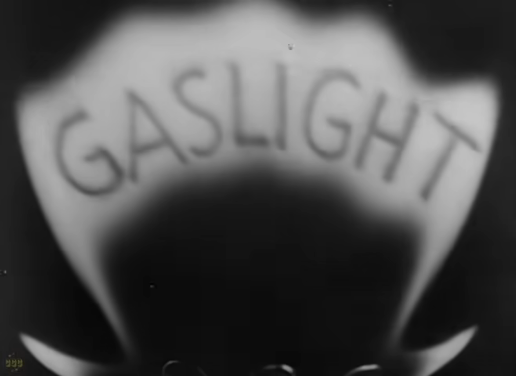 It’s the same appeal made by all gaslighters, “Believe me. I know. You don’t.”9
How Gaslighting Works
Gaslighting works because it is just plausible. You know you’ve been wrong about things before. Maybe you’re wrong about this thing. Maybe the gaslighter does know. Maybe you don’t. … Maybe.
But like a magician on a stage, gaslighters only show what they want to be seen. What they don’t, they find some way to hide while they pull off their trick.
What gaslighters show is your doubt about what you know. What they try to hide is your doubt about what they know. And the stage prop they use to try to hide this doubt is themselves.
Gaslighting’s Core Problem
The gaslighter’s appeal isn’t insidious because it’s always wrong. Even gaslighters can be right about some things. Their appeal is insidious because it insulates the gaslighters themselves from criticism.10
According to Oceania’s ever-proficient party gaslighters,
“Who controls the past … controls the future: who controls the present controls the past.” And yet the past, though of its nature alterable, never had been altered. Whatever was true now was true from everlasting to everlasting. It was quite simple. All that was needed was an unending series of victories over your own memory.11
What gaslighters say must be taken as true because it’s they who say it. Grant that premise, and you get to be the gaslighter’s on-stage assistant. You get to participate in hiding away
- doubts about what the gaslighter knows and even
- the question of what’s actually true.
In exchange, the gaslighter provides you the answer to this question, all neatly packaged. (Un)lucky you.
Putting out Gaslighting
Of course, that’s an awful trade. But what’s the alternative?
Surely, it’s not to say that you’re right instead just because you’re you. You can’t beat gaslighters at their own game.
The alternative is to play a different game altogether. And the name of that game is “memory.”
Memory and Knowledge
Nearly everything that humans know we know by way of memory. Future knowledge we obviously don’t yet have. Knowledge of the past we obviously only have becaue of memory.
It might be memory of this or that personal experience. Or it could be this or that bit of information we learned by other means.
But the same applies even in the small, fleeting slice of time we call the “present.” We know things as we do only because of how we interpret the present in connection with memory.
Without memory, the momentary experience of the present would never accumulate. We would always and forever learn things over again, as if for the first time.
Memory and Accountability
When gaslighting suggests a narrative, remembering naturally and unavoidably consults its own recollections.But what memory wants to insist is not merely that it can tell a compelling counter narrative to gaslighting. Settling for that would merely turn memory into another name for gaslighting. Instead, memory wants to say that there are reasons for itself that are outside itself.12
Perhaps memory’s reasons won’t prove sufficient for the gaslighter to come around to memory’s viewpoint. But just like with other kinds of narcissism, you can’t negotiate with a gaslighter. You can only
- commit to remember and to be accountable to the world outside yourself,
- refuse to play along with gaslighting,
- resist gaslighters’ invitations to collaborate with imagining the world as they demand, and
- welcome gaslighters to the table—not to try to domineer and gaslight you—but, when they’re ready, to sit down as equal peers to search for and be accountable to the truth of things together.13
Conclusion
In the strike on the Dormition Cathedral, one of the structures that remained quite functional was Kyiv-Pechersk Lavra’s bell tower. In the aftermath, the bell tower could be heard playing the Ukrainian anthem.14
Its doing so was hardly random. Especially there, especially then, the tune was an act of remembrance. As the bells rang, they rang not least in memory of the character of the conflict in which the Dormition Cathedral had been damaged.
Postscript
In summer 2003, I spent about 7 weeks in Ukraine, mostly in Kyiv. While there, the group I was with paid a visit to Kyiv-Pechersk Lavra.
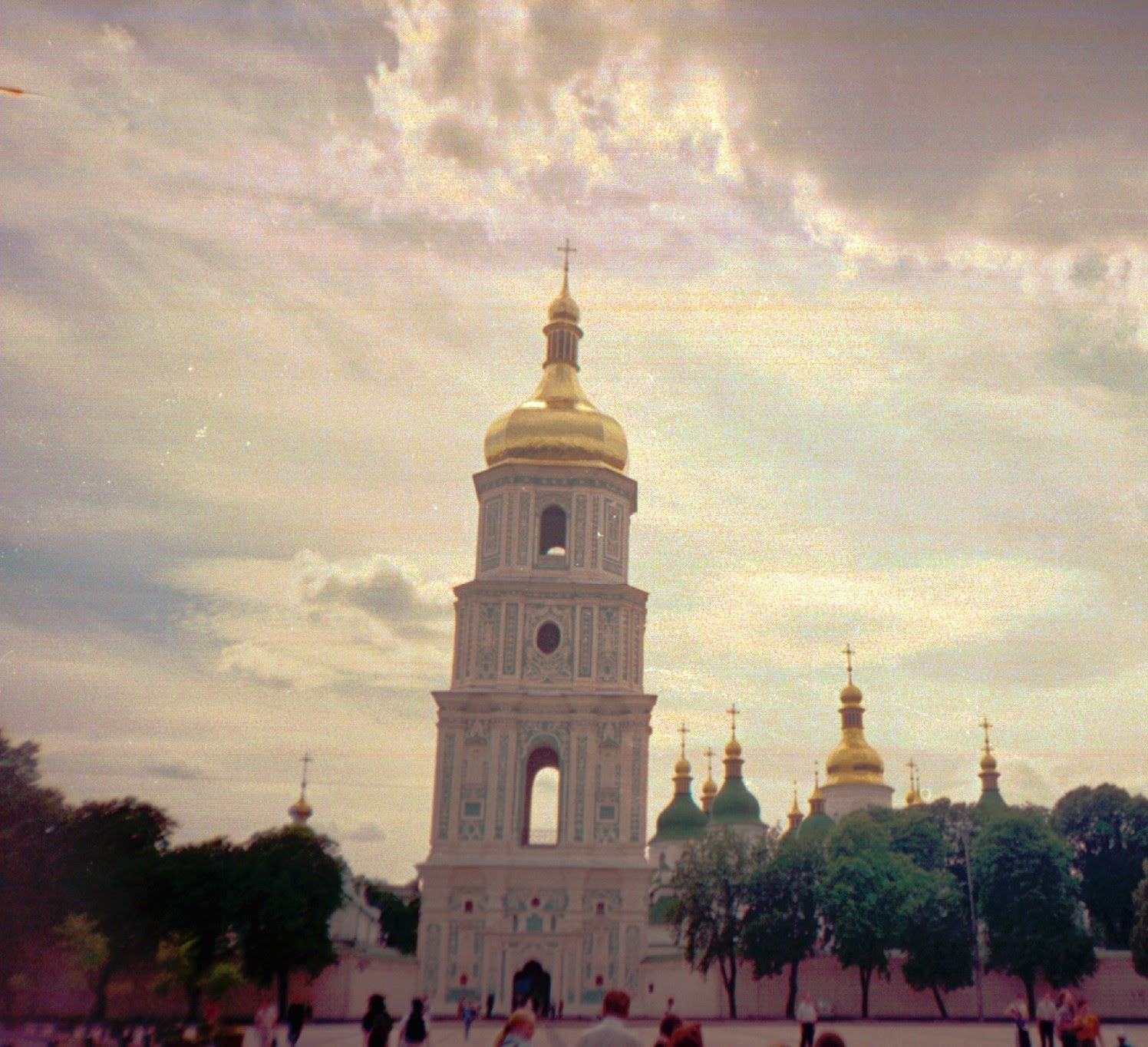
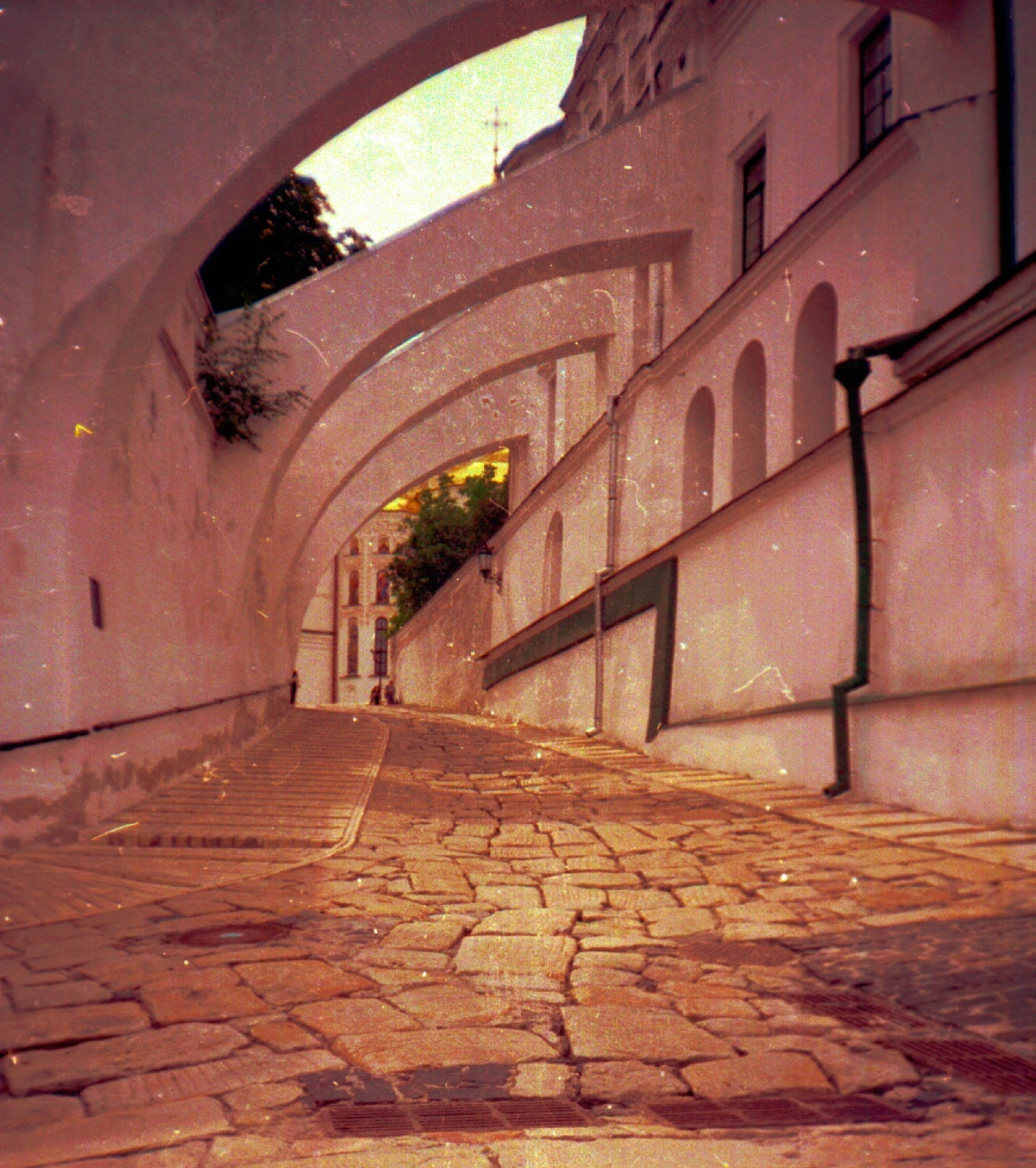
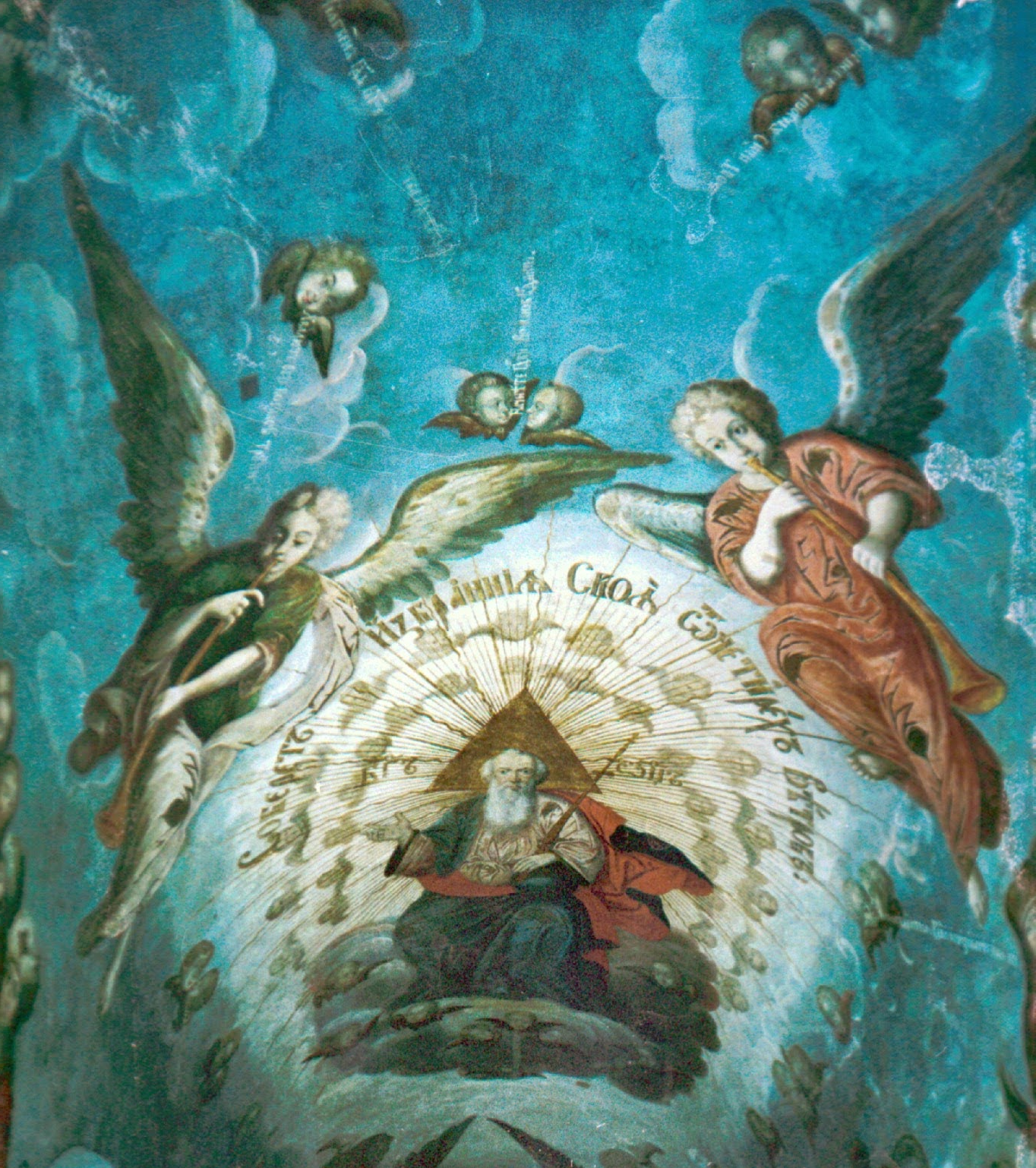
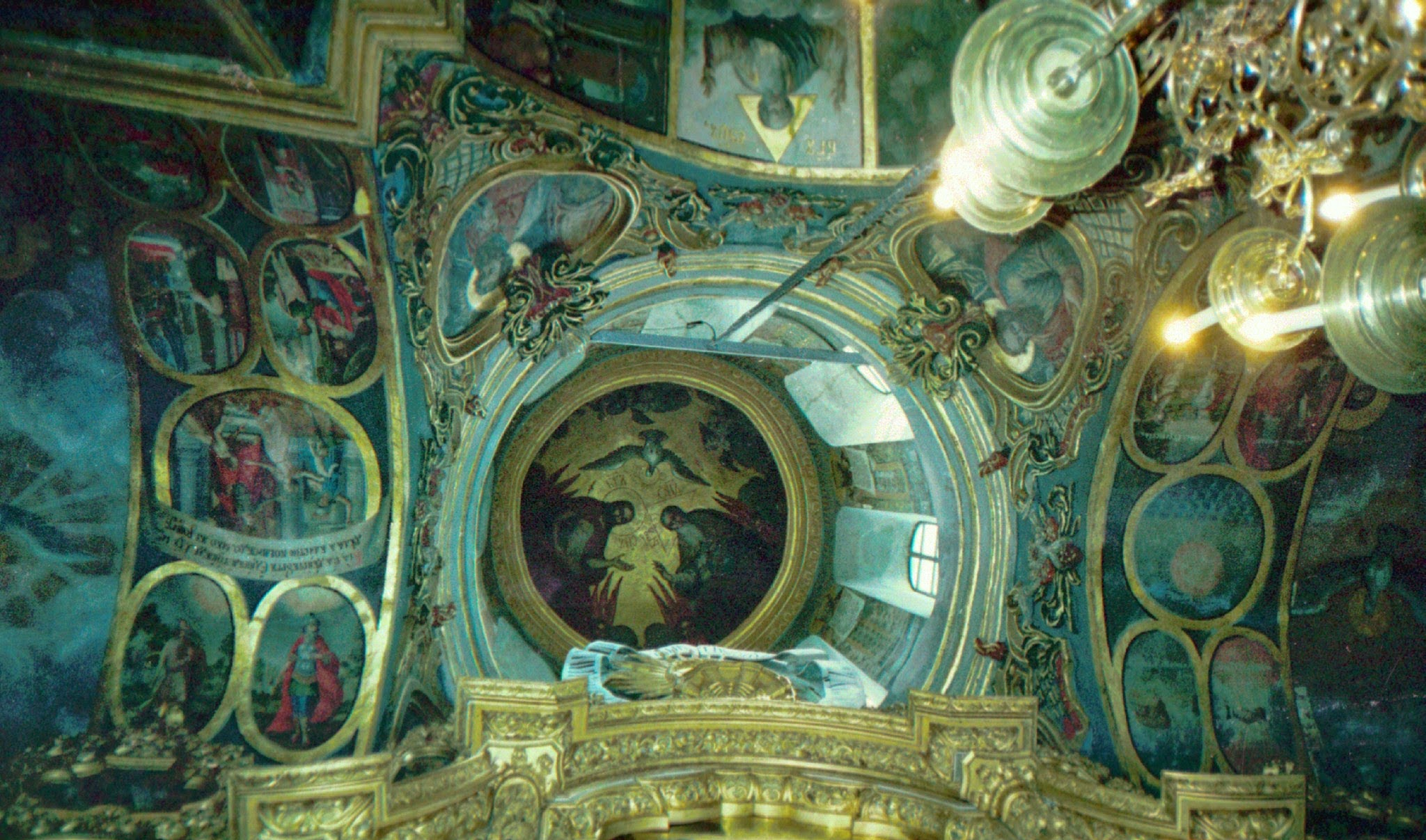
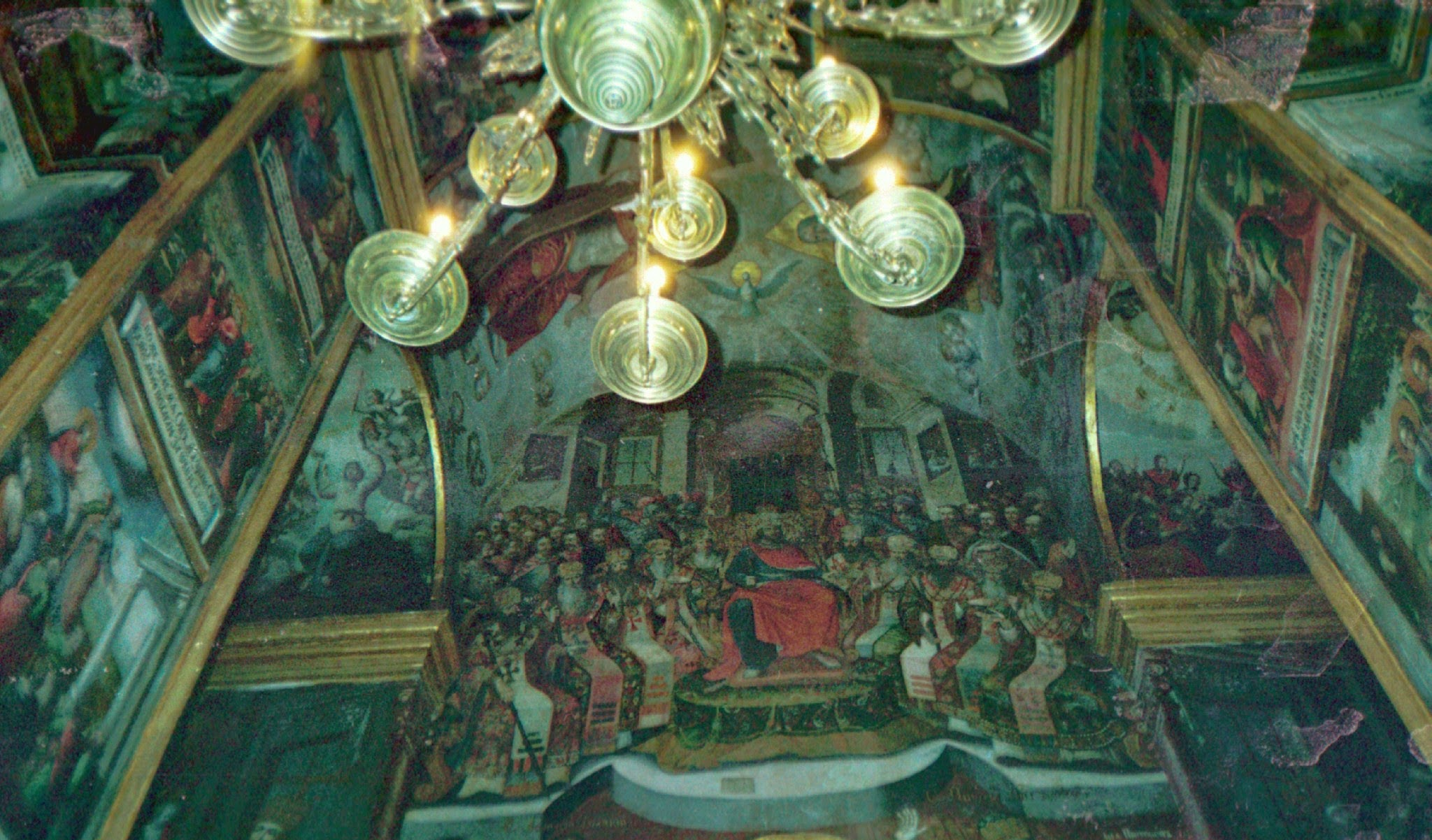
At that time, renovations had only recently completed restoring the complex since the damage it sustained during the German invasion in 1941.15 Times being what they were, I didn’t come back with scores of high-quality digital photographs of the site. But in the interests of sharing memories, those that I have are below.16
From the Kyiv-Pechersk Lavra Complex
Dormition Cathedral (center) and Bell Tower base (right) Bell Tower Refectory Church of St. Nicholas of Myra Steeple Trinity Church Holy Gate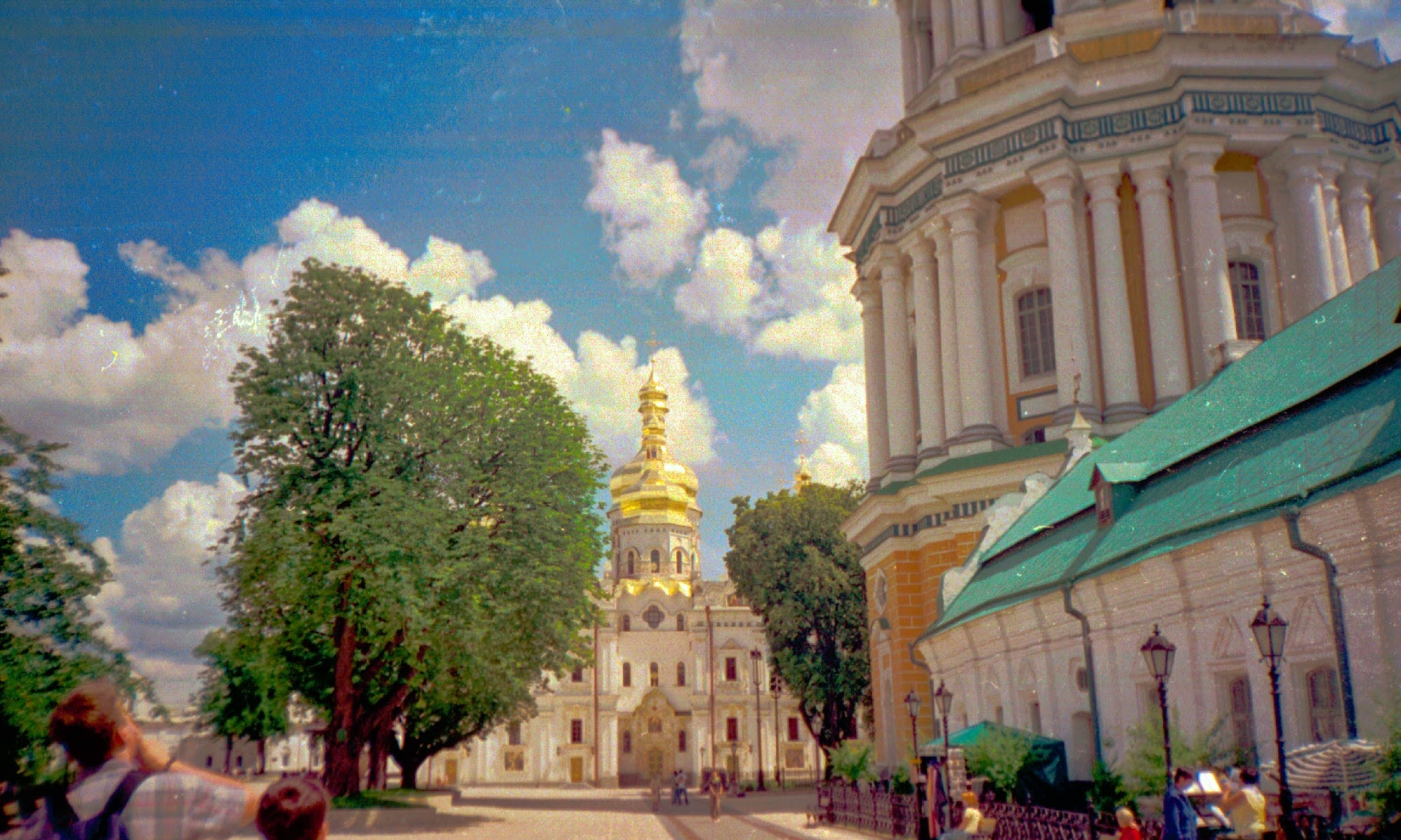



From Old Kyiv
St. Michael’s Cathedral Bell Tower St. Andrew’s Church St. Andrew’s Church St. Andrew’s Church St. Sophia Cathedral Bell Tower St. Sophia Cathedral Bell Tower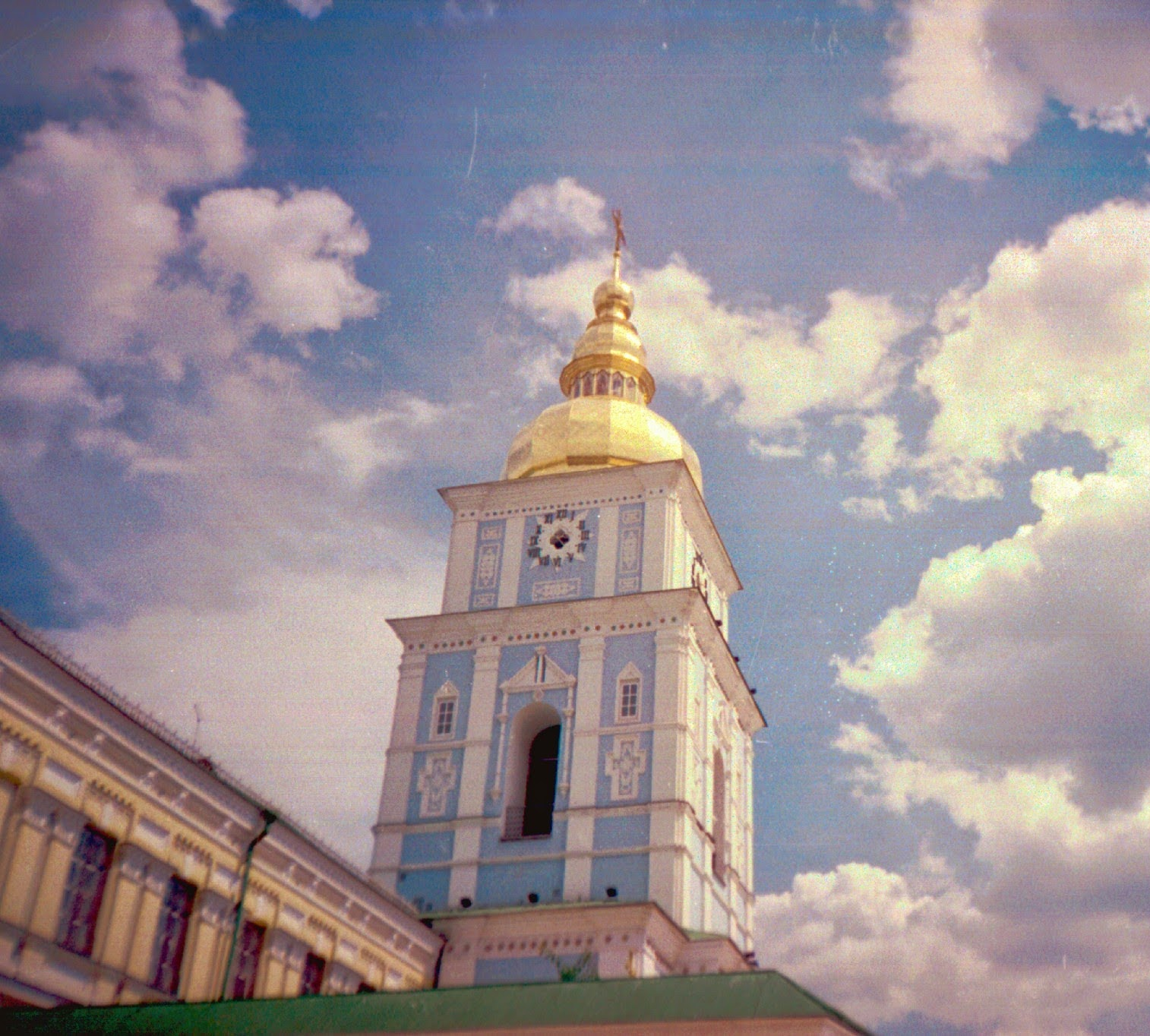


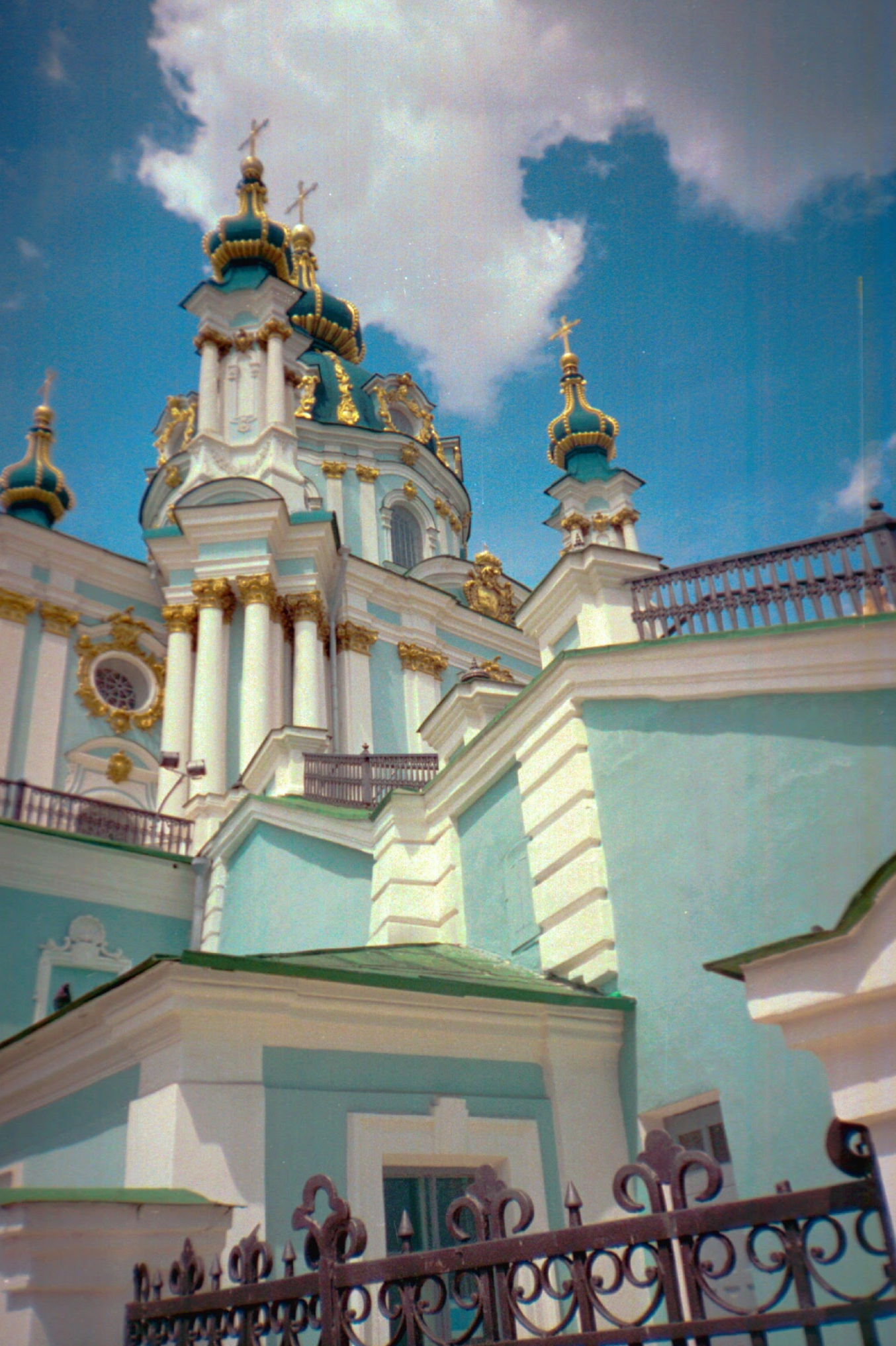

From Other Places around Kyiv

Efrem Lukatsky, Evgeniy Maloletka, and Danylo Antoniuk, “Large-Scale Russian Attack Sparks Fire at Historic Monastery and Other Sites in Ukraine, in Photos,” Associated Press News, 15 June 2026. Header image provided by Vlad Dokhvat. ↩︎
“Kyiv: Saint-Sophia Cathedral and Related Monastic Buildings, Kyiv-Pechersk Lavra,” United Nations Educational, Scientific and Cultural Organization, n.d. ↩︎
Lucy Papachristou, “Russia Says It Did Not Strike Kyiv Monastery, Says a U.S.-Made Patriot Air Defence Missile Did,” Reuters, 15 June 2026. ↩︎
Papachristou, “Russia Says It Did Not Strike Kyiv Monastery.” ↩︎
Peter Beaumont, “Kyiv Monastery Set on Fire in Night of Russian Attacks across Ukraine,” The Guardian, 15 June 2026. ↩︎
Ministry of Foreign Affairs of Ukraine, “The Ukrainian Anthem Echoes through Kyiv Pechersk Lavra after Russia’s Strike,” YouTube, 15 July 2026. ↩︎
“Ukrainian Drone Force,” Warpower: Ukraine, 2026. ↩︎
On this usage for the term “gaslight,” see Merriam-Webster.com. A subsequent film adaptation is available on YouTube. ↩︎
H.-G. Gadamer, Truth and Method, ed. and trans. Joel Weinsheimer and Donald G. Marshall, 2nd ed., Bloomsbury Revelations (affiliate disclosure; Bloomsbury Academic, 2013), 389. ↩︎
George Orwell, 1984 (Signet, 1949), 29; see also Wicked: For Good, motion picture (Universal Pictures, 2025). ↩︎
Cf. Desmond Tutu, “Address to the First Gathering of the Truth and Reconciliation Commission,” South Africa Department of Justice and Constitutional Development, 16 December 1995. ↩︎
Cf. H.-G. Gadamer, Philosophical Hermeneutics, ed. and trans. David E. Linge (affiliate disclosure; University of California Press, 1977), 25. ↩︎
Ministry of Foreign Affairs of Ukraine, “The Ukrainian Anthem.” ↩︎
Kate Tsurkan, "‘One of the Holiest Places’: Why Kyiv’s Ancient Pechersk Monastery Is so Important for Ukraine," The Kyiv Independent, 15 June 2026. ↩︎
This said, it’s possible there are a few photographs here that are actually from different sites. If you notice any, I’m happy to receive notes about corrections via Bluesky, LinkedIn, or Mastodon. ↩︎